
Website Optimisation Case Study: Quantifying ROI of Chat Widgets, Site Performance and UX Design
Background
Businesses increasingly rely on their websites to generate leads and revenue. Poor user experiences—whether caused by slow loading times, confusing layouts or friction in the booking process—lead visitors to abandon the site. Improving the user experience is therefore a high‑leverage investment. This case study explores the return on investment (ROI) of a holistic website optimisation project for a mid‑sized business. The project includes:
- Installing a live chat widget that allows visitors to speak to a representative immediately.
- Speed and performance optimisation to reduce page load times.
- UX and layout redesign to create a more intuitive and persuasive experience.
- Integrating a booking calendar with the chat widget so visitors can schedule meetings instantly.
The analysis uses contemporary research to estimate the impact of each component on conversion rate and revenue.
Impact of live chat widgets on conversions
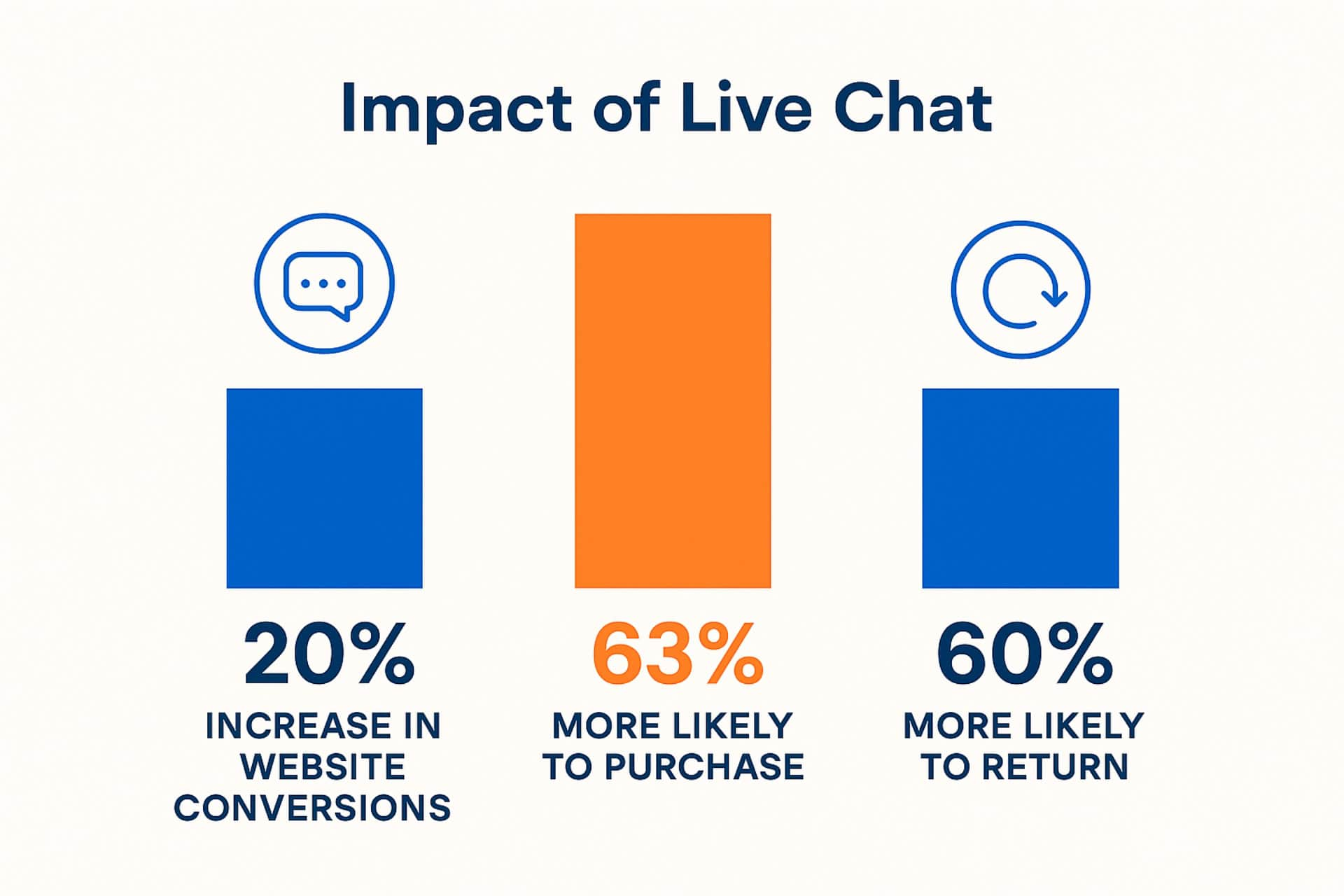
Surveys show that a majority of customers prefer websites that offer real‑time assistance. For example, research from Tidio found that about 60 % of customers are more likely to return to a site and over 63 % are more likely to purchase when a live chat option is available. Companies implementing live chat report significant lifts in conversion rates and customer satisfaction.
Effect of site speed on user behaviour
Visitors expect pages to load within a couple of seconds. Portent’s 2022 study found that a site that loads in one second has a conversion rate three times higher than a site that loads in five seconds and five times higher than a site that loads in ten seconds. The same research noted that when pages load in one second the average conversion rate is almost 40 %, dropping to 34 % at two seconds and 29 % at three seconds. Speeding up your site not only improves conversions but can more than double potential sales.

Impact of UX design and layout
First impressions matter. Web design research shows that 88 % of web users are less likely to return to a website after a poor user experience. Investment in user‑centric design pays off: Forrester research cited by the Baymard Institute reports that a well‑designed, frictionless UX can raise conversion rates by up to 400 %, delivering an ROI of $100 for every $1 invested (a 9,900 % ROI) and that Staples increased its online revenue by 500 % after a UX‑focused redesign. Additionally, conversion rates can increase by over 3 % after redesigning pages to include a clear call‑to‑action. Elements such as clear calls to action, intuitive navigation and responsive layout are critical.

Scheduling integration and speed‑to‑lead
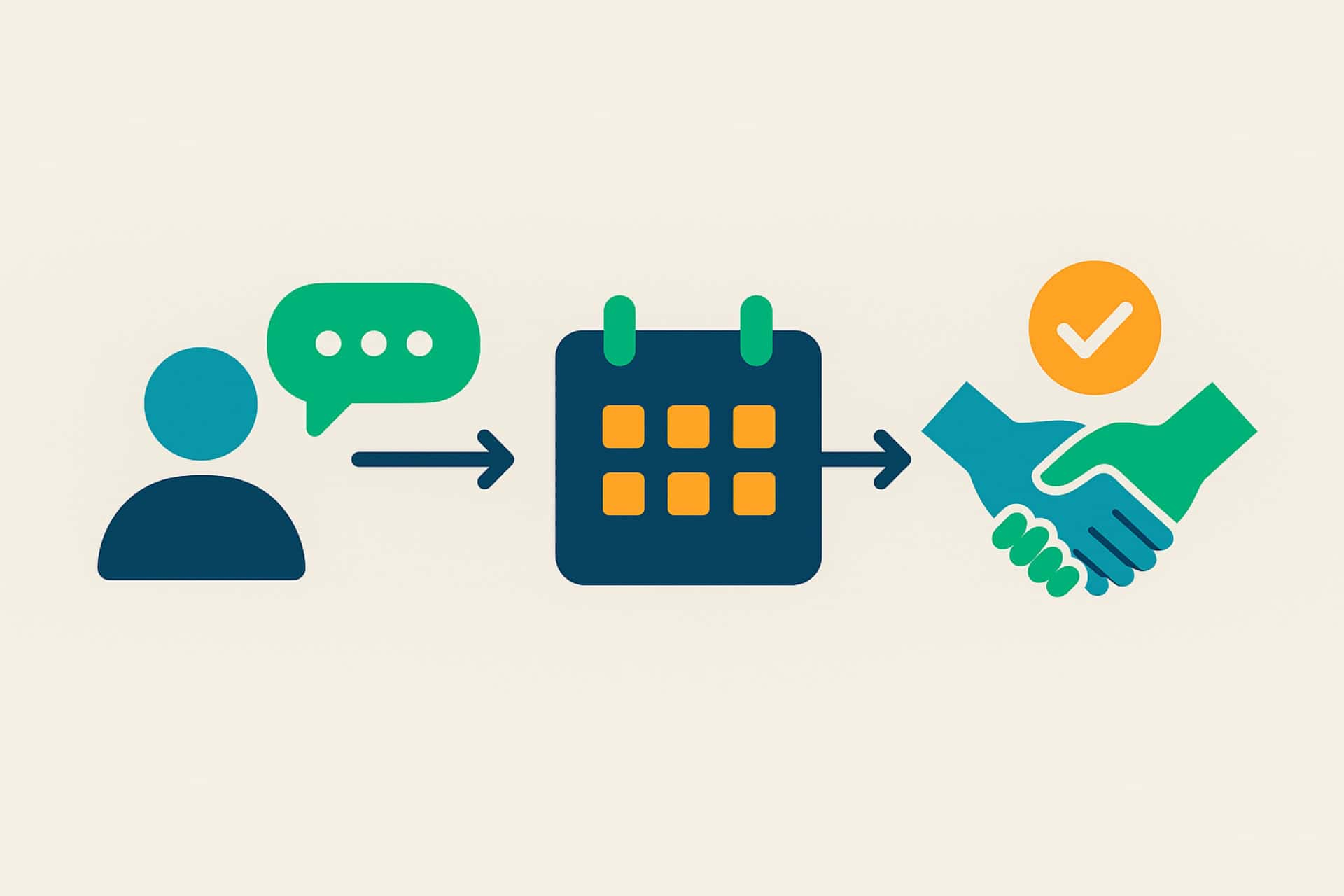
Time is of the essence in sales. Sales statistics indicate that responding to leads within five minutes increases the likelihood of engagement by nine times and that 35–50 % of sales go to the vendor that responds first. The same report notes a 10× drop in lead qualification success when response time exceeds five minutes and a 400 % decrease when responding within ten minutes versus five minutes. Integrating an automated booking calendar into the confirmation page or live chat lets prospects book meetings instantly. Scheduling automation tools like Chili Piper’s Form Concierge enable companies to convert leads to pipeline in seconds and have been reported to double inbound conversions and cut lead drop‑off by half.
Hypothetical scenario and ROI analysis
To illustrate how these findings translate into business value, consider a mid‑sized B2B service provider that receives 10,000 monthly website visitors and has an average revenue per conversion of €100. Currently, the site converts 2 % of visitors (200 conversions per month), producing €20,000 in monthly revenue. The company invests in the following improvements:
Baseline and cost assumptions
| Item | Cost (one‑time / monthly) | Baseline performance |
|---|---|---|
| Existing website (no chat, slow load time) | – | 10,000 visitors/month, 2 % conversion rate, 200 conversions/month, €20,000 revenue |
| Live chat software (installation & licence) | €500 one‑time install + €50/month | – |
| Speed & infrastructure optimisation | €5,000 one‑time + €100/month maintenance | Average load time 4 s → targeted 2 s |
| UX redesign (layout, calls‑to‑action, responsive design) | €10,000 one‑time | Existing design lacks clear calls‑to‑action |
| Booking calendar integration | €200/month | – |
Projected conversion improvements
- Live chat widget: Businesses using live chat frequently see conversion lifts of around 20 %. Applying a 20 % increase moves the conversion rate from 2 % to 2.4 %.
- Speed optimisation: Reducing load time from four seconds to two seconds yields roughly a 0.6‑percentage‑point increase in conversions. The conversion rate rises from 2.4 % to roughly 3.0 %.
- UX and layout redesign: Following conservative assumptions based on research (a 40 % relative uplift), the conversion rate increases to about 4.2 %. Clear calls to action and intuitive navigation contribute to this improvement.
- Booking calendar integration: Instant scheduling can double inbound conversions and cut drop‑off by half. Assuming 10 % of visitors engage with chat or forms, doubling their conversion rate adds another 42 conversions. Overall conversion rate rises from 4.2 % to approximately 4.62 %.
ROI calculation
Monthly revenue after all improvements climbs to about €46,200, versus the original €20,000. One‑time costs total €15,500 and monthly recurring costs equal €350. Amortising the one‑time costs over a year yields approximately €1,292 per month, resulting in total monthly costs of about €1,642. Comparing the revenue gain (€26,200) to the monthly cost shows an estimated ROI approaching 1,490 % per month.
Qualitative benefits
- Higher customer satisfaction and loyalty: Visitors prefer sites with real‑time assistance and are more likely to return.
- Lower bounce and abandoned sessions: Faster load times reduce frustration and prevent visitors from leaving prematurely.
- Stronger brand perception: Professional, user‑focused design builds trust and credibility.
- Operational efficiency: Integrated scheduling tools reduce manual follow‑ups and ensure timely responses.
Conclusion
This case study synthesises data from credible research to quantify the ROI of a comprehensive website optimisation project. The evidence shows that live chat, speed optimisation, UX redesign and instant booking integration collectively deliver dramatic improvements in conversion rates. Even with conservative assumptions, the projected return on investment far outweighs implementation costs. Beyond financial gains, these improvements enhance customer satisfaction, reduce friction and position the brand as modern and responsive—an investment that pays dividends across the entire customer journey.