Web Design & UX
Web Design Tips for Construction Companies
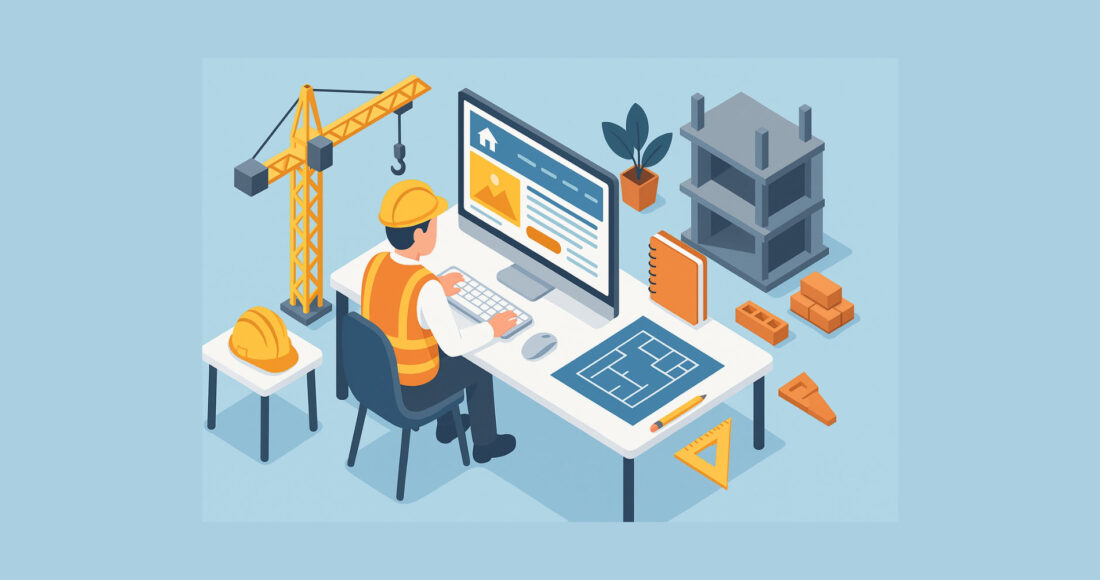
If you run a construction or home improvement business, your website might be costing you jobs — even if you don’t realize it.
These days, clients don’t flip through the Yellow Pages or wait for a word-of-mouth referral. They search online, compare websites, and choose the company that looks the most professional and ready to help. If your site looks outdated, loads slowly, or doesn’t clearly communicate what you offer — you’re losing leads to competitors who’ve invested in their online presence.
At Negosense, we don’t just build websites. We combine CRM setup, marketing automation, and high-converting web design to create complete lead generation systems for construction companies. Your new website becomes a 24/7 sales machine — not just a digital brochure.
But before you jump into redesigning your site, you need to know what actually works. In this post, we’ll break down the features and strategies that separate a lead-generating website from one that just takes up space online.
Why Most Construction Company Websites Fail
Most contractor websites are built with the wrong goal in mind — looking nice, not driving revenue. They’re often built by designers who don’t understand construction, sales, or how homeowners actually choose contractors.
Here’s where most construction websites fall short:
- No clear value proposition above the fold
- Slow mobile experience, which tanks your Google ranking
- No conversion flow (visitors don’t know what to do next)
- Missing trust builders like reviews, photos, and licenses
- Zero follow-up — if someone fills out a form, no one gets back to them quickly
The result? You might get traffic, but you’re not turning visitors into jobs. And in a competitive market, that’s a huge missed opportunity.
What today’s clients expect from a contractor’s website:
- Mobile-friendly, fast-loading layout
- Clear explanation of services and specialties
- Visual proof: project photos, testimonials, before/after examples
- Instant ways to get in touch (call, quote form, chatbot)
- Follow-up when they fill out a form — not silence
A modern construction website needs to do more than look good. It should guide the visitor from curious to convinced — and then plug them directly into your sales pipeline.
What Makes a Great Construction Website?
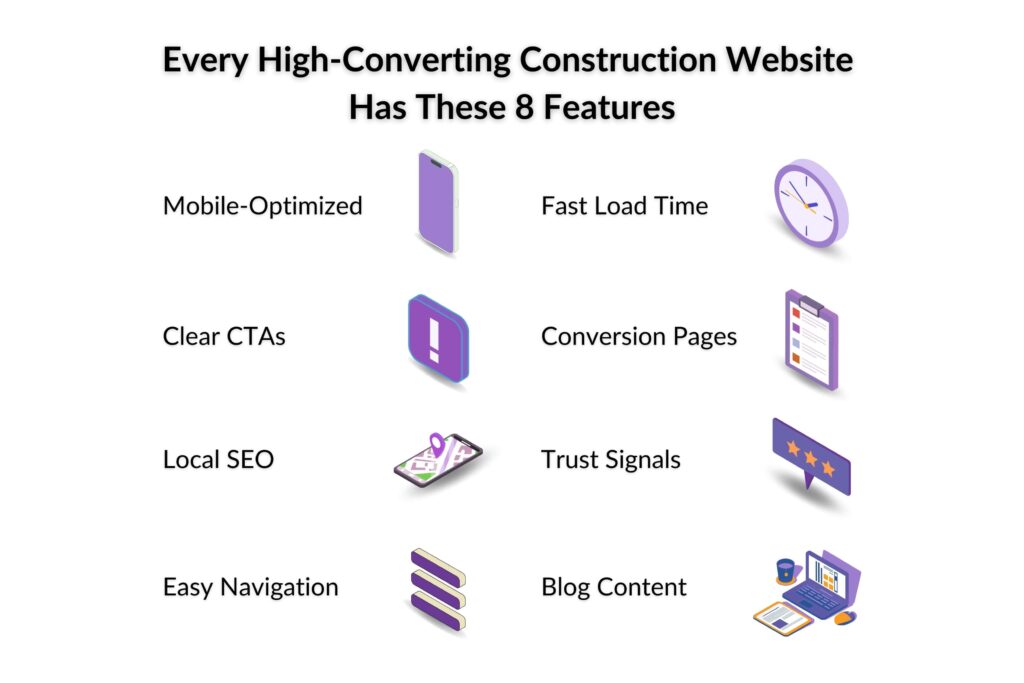
A great construction website isn’t just clean and professional-looking — it’s strategically built to convert visitors into leads.
You’re not just showcasing your work. You’re guiding potential customers from “just browsing” to “I want to work with this company.” That means your website needs to do more than exist — it needs to perform.
Here’s what separates a high-performing construction website from the rest:
1. A Clear, Compelling Headline Above the Fold
When someone lands on your homepage, they should immediately know:
- What you do
- Who you serve
- Why they should choose you
Example:
“Trusted Roofing and Renovation Experts Serving [City] Since 2008”
Pair this with a strong call-to-action — like a “Request a Quote” button — and you’ve already beaten 90% of contractor websites.
2. A Portfolio That Shows (Not Just Tells)
Homeowners and commercial clients want proof. Don’t just say you’re good — show them:
- High-quality project photos
- Before/after comparisons
- Short case studies
- Client testimonials near each project
Visual proof builds trust faster than words ever can.
3. Mobile-First Design
Most of your traffic comes from mobile devices. If your site doesn’t load fast and look clean on a phone, you’re losing business.
What to check:
- Can visitors click to call you easily?
- Does the quote form work perfectly on mobile?
- Are images and text formatted for small screens?
We design every site to be mobile-first and optimized for speed, which also helps with your Google rankings.
4. Built-In Trust Signals
Trust is everything in construction. Your site should reassure visitors that you’re legitimate and reliable by including:
- Google Reviews feed or embedded testimonials
- Association logos (e.g. BBB, local guilds)
- Insurance and licensing badges
- Clear “About Us” with your years of experience and team photo
5. A Conversion Flow — Not Just a Menu
Most contractor sites list pages and hope people explore. But a converting site guides people through a journey:
- Step 1: See what you offer
- Step 2: View past work and reviews
- Step 3: Fill out a short quote form
We design all our construction websites to guide the visitor toward a call, form fill, or quote request — then plug that lead straight into your CRM for fast follow-up.
Next Up: We’ll break down the exact features your construction site needs to generate leads consistently — and how to avoid the common traps.
Templates vs Custom: What’s Right for Contractors?
If you’ve ever searched for “contractor website templates,” you’ve probably seen dozens of options that promise quick setup and slick designs. And sure — templates can look good on the surface. But when your goal is to generate consistent, high-quality leads, they often fall short where it matters most.
Let’s break down the trade-offs.
Templates: Fast and Easy — But Limited
Template sites can be appealing if you’re trying to get online quickly. Most are pre-designed and only require you to swap out photos and text.
The catch?
- You’re locked into someone else’s structure
- Pages aren’t optimized for conversions
- You can’t fine-tune user flow or integrate automation tools easily
- They’re often bloated with unnecessary code, which slows your site down
They’re fine if your goal is to exist online — but not if your goal is to grow.
Custom Websites: Designed to Convert
A custom website gives you full control over how people move through your site and take action. It’s built around your business — not squeezed into someone else’s mold.
Benefits include:
- Strategic layout tailored to your services and clients
- Optimized lead capture flow tied directly to your CRM
- SEO structure designed for local visibility
- Flexibility to add advanced features like quote builders, calculators, or staff portals
And unlike a template, a custom site can grow with you as your business evolves.
Why We Only Build Custom Systems
At Negosense, we don’t offer templates — because they’re not built to solve real business problems.
Instead, we:
- Design your site based on your services, location, and goals
- Set up your CRM and marketing automation alongside the website
- Create a system that doesn’t just look good — it brings you leads on autopilot
A good website looks professional.
A great one works behind the scenes to generate revenue.
Next: We’ll shift gears and look at how design priorities change for home improvement businesses — and what you can borrow from that playbook.
Website Design for Home Improvement Businesses
Home improvement companies have slightly different needs than general construction firms — but the goal is the same: turn online visitors into booked jobs.
Whether you specialize in kitchens, bathrooms, landscaping, or full-home remodels, your website needs to reflect the kind of transformation your clients are dreaming about. That means leaning into visual storytelling, trust-building, and ease of communication.
1. Showcase the Transformation, Not Just the Work
In home improvement, aesthetics matter. Clients want to be inspired — not just informed.
Your website should:
- Use high-quality before/after images
- Include project walkthroughs or galleries organized by service
- Add short blurbs explaining the client’s problem and how you solved it
Why it works: It helps the visitor picture their own transformation — and positions you as the expert who can deliver it.
2. Appeal to Emotion and Lifestyle
Unlike commercial construction, homeowners aren’t just hiring a crew — they’re investing in their dream home. The language and layout should reflect that.
Effective home improvement sites:
- Use benefit-focused copy (“Make your kitchen the heart of your home”)
- Feature warm, modern design with lifestyle imagery
- Include testimonials that speak to client experience, not just the result
This creates an emotional connection that builds trust before you even speak with them.
3. Make It Easy to Take the First Step
Many home improvement jobs start with uncertainty: “How much will this cost?” or “Is this even possible?” Your website should lower the barrier to starting the conversation.
You can do this by:
- Offering a short project inquiry form instead of a detailed quote request
- Including a “How It Works” page to explain your process
- Embedding a chatbot or scheduling widget for no-pressure consultations
This helps move people from interested to in touch — without overwhelming them.
4. Build Long-Term Trust
Unlike one-off contractor jobs, home improvement companies often develop relationships that last for years. That means your site should also reflect your values and reputation.
Consider adding:
- A blog or resource section that educates clients on design and planning
- A project tracker portal for ongoing clients
- A dedicated page for repeat services like seasonal maintenance or upgrades
Great websites don’t just land the first job — they help you win the second and third, too.
Up next: we’ll dig into the most common website mistakes that cost contractors leads — and how to fix them before your competitors do.
What to Expect When You Work With Us
Now that you know what makes a construction or home improvement website actually convert, here’s how we help bring it all together.
We don’t just build you a site — we build you a system.
What’s Included:
- Custom website design tailored to your brand and services
- CRM setup to manage leads, quotes, and follow-ups in one place
- Marketing automations that engage prospects instantly and close more deals
- Ongoing support so you’re never stuck trying to fix things alone
Everything is connected — from your quote form to your inbox, from your homepage to your pipeline.
Why It Works
When your web design, lead generation, and sales systems work together, you stop guessing where the next job will come from. You start getting consistent, high-quality leads — even when you’re on the job site. If you want to learn more about how we build your automated growth engine, check out our in-depth article about digital marketing for home services.
This isn’t a redesign. It’s a revenue engine.
Ready to turn your website into a 24/7 lead-generating machine?
Book a free strategy call and let’s map out your new system.
FAQ: Construction and Home Improvement Website Design
How much does a website for a construction company cost?
It depends on the scope and features. Template sites might cost a few hundred dollars, but they often lack the functionality and strategy needed to generate leads. Our full system — which includes custom web design, CRM setup, and marketing automation — is priced to deliver ROI, not just a finished product. Book a call and we’ll walk you through your options.
Do I really need a custom website, or can I just use a template?
Templates can get you online quickly, but they’re rarely built to convert leads. A custom site gives you full control over user flow, SEO, and integration with tools like CRMs and automations — all of which are essential for growth in 2025.
What if I already have a website?
That’s a great starting point. We can audit your existing site to see what’s working, what’s missing, and how to rebuild it into a high-performing system that actually brings you leads.
Do you only work with construction businesses?
We specialize in construction, remodeling, landscaping, and other home service industries. If your business is appointment-based and project-driven, chances are we can help you turn your site into a lead generation machine.
What’s the timeline to launch my new site?
Most projects are up and running within 2–3 weeks, depending on your readiness and scope. Since we’re not just designing — we’re integrating CRM and automations — we move fast, but we don’t cut corners.
Will I be able to update the website myself?
Yes. We build your site with a drag-and-drop editor, so you can easily update text, photos, services, or contact info — without needing a developer. We also offer ongoing support if you prefer to hand it off.
What makes your service different?
We don’t sell websites. We build growth systems. You get a custom-designed site paired with the tools and automation needed to actually generate leads — and convert them. No more relying on word of mouth or chasing down cold leads.