CRM & Job Management
The Best CRMs for Electrical Contractors in 2025
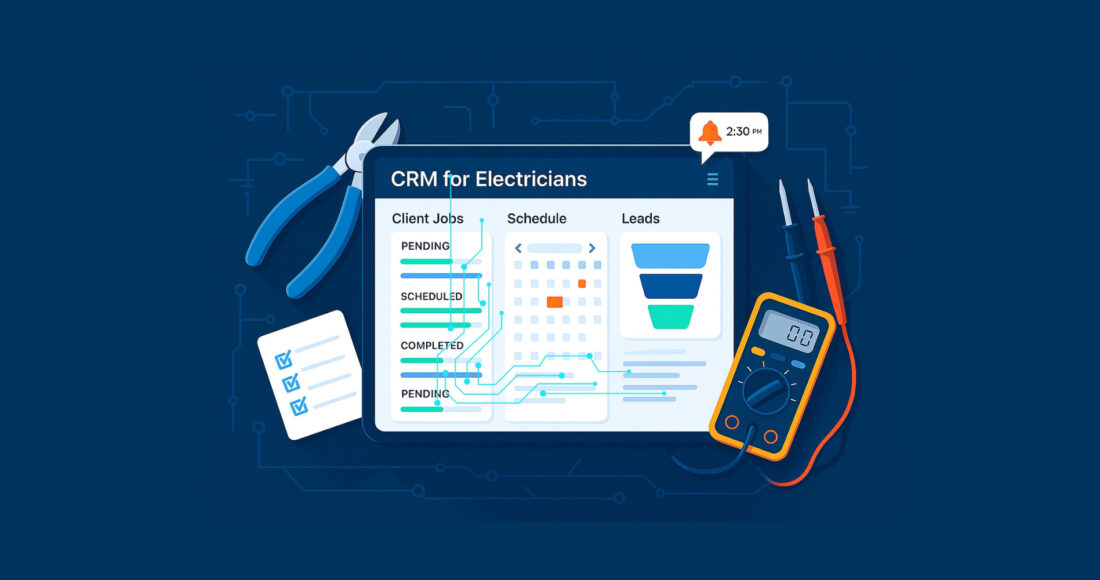
In today’s competitive electrical contracting industry, staying organized, responsive, and efficient isn’t just a nice-to-have—it’s essential. That’s where a CRM (Customer Relationship Management) system comes in. The best electrician CRM isn’t just a glorified address book—it’s your command center for tracking leads, managing jobs, maintaining customer relationships, and boosting profitability.
Whether you’re a solo electrician or running a growing team, the right CRM for electrical contractors can help you streamline day-to-day operations, reduce paperwork, and never miss a follow-up again. From managing quotes and appointments to automating customer communication and integrating with your invoicing tools, the right system does the heavy lifting so you can focus on what you do best—delivering high-quality electrical work.
In this guide, we’ll break down the top CRM platforms built for electrical contractors, the features you need to look for, and how to choose the one that best fits your business. If you’re also looking to upgrade your website, generate more leads, or improve your online visibility, we’ll show you how pairing your CRM with smart marketing strategies can take your contracting business to the next level.
Why Every Electrician Needs a CRM
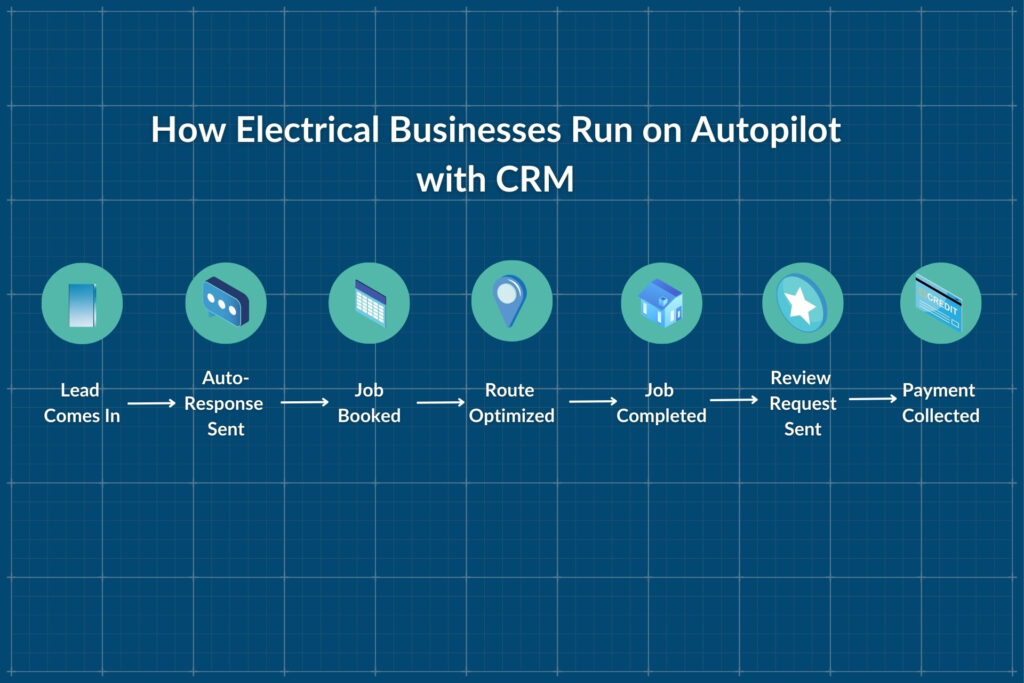
Running an electrical contracting business comes with a lot of moving parts—appointments, estimates, invoicing, team coordination, customer follow-ups, and lead management, just to name a few. Without a centralized system to manage it all, things can easily fall through the cracks. That’s where a CRM for electrical contractors becomes a game-changer.
Let’s break down exactly why CRM software is so valuable for electrical businesses:
Streamlining Operations
Electrical contractors often juggle multiple jobs at once—each with its own set of tasks, timelines, and communication threads. A good CRM for electricals helps streamline these operations by keeping all your project data, client information, job statuses, and communication in one place. Instead of digging through emails or paper files, everything is organized and accessible at a glance. This level of organization not only saves time but also reduces costly errors and miscommunication.
Improved Customer Relationship Management
Your relationships with clients don’t end once the job is complete. Whether it’s following up for feedback, sending out maintenance reminders, or handling future upgrades, maintaining strong customer connections can lead to repeat business and referrals. A CRM allows you to store customer history, preferences, and notes—so every interaction feels personal and professional. It’s like giving your business a memory.
Efficient Lead Management
Let’s face it—leads are the lifeblood of any service business. Without a system in place, it’s easy to lose track of potential clients or forget to follow up. With a CRM, every lead is captured, categorized, and tracked through your sales pipeline. You can set automated follow-ups, schedule calls, and make sure no opportunity slips away. This means more closed deals and a healthier bottom line.
Top CRM Features for Electrician Businesses
Not all CRMs are created equal—especially when it comes to the unique needs of electrical contractors. While most platforms claim to help you manage contacts and tasks, the best ones go beyond that. The right CRM should support the way your business actually works in the field and in the office.
Here are the essential features to look for when evaluating your options:
Project Management Capabilities
As an electrical contractor, you’re not just handling one-off tasks—you’re managing complex projects that involve estimates, materials, team assignments, inspections, and deadlines. A CRM with built-in project management tools lets you track progress across multiple jobs, assign tasks to team members, and keep everything moving forward without a hitch.
Mobile Access
Whether you’re on-site, in the van, or between appointments, you need your tools to move with you. A CRM that’s fully accessible via mobile ensures you can check job statuses, update customer notes, send invoices, or follow up with leads—all while on the go. For contractors and crews in the field, this is non-negotiable.
Integration with Other Tools
Your CRM shouldn’t operate in a silo. Look for systems that integrate smoothly with the software you already use—like QuickBooks for accounting, Google Calendar for scheduling, or your email marketing platform. These integrations eliminate double data entry and keep your workflows running smoothly from lead to payment.
Customization Options
Every electrical business has its own way of doing things. Maybe you offer 24/7 emergency services, or maybe you specialize in new builds and renovations. Whatever your focus, your CRM should be flexible enough to match. Customizable fields, pipelines, and workflows allow you to tailor the system to your specific processes, rather than adjusting your business to fit the software.
The Best CRMs for Electrical Contractors
Finding the right CRM can be the difference between juggling jobs manually—or running your electrical business like a well-oiled machine. The platforms below stand out for their ability to help contractors stay organized, convert more leads, and scale operations with less stress. But let’s be clear: not all CRMs are created equal.
Here are the top picks if you’re looking for a CRM for electrical businesses owners that can handle quoting, scheduling, client follow-up, and more.
CRM Option 1: Negosense CRM

Overview:
Negosense CRM isn’t just a tool—it’s your growth engine. Built from the ground up for electrical contractors and other home service businesses, it combines CRM, job management, marketing automation, and a high-converting website into one powerful system. It’s like having a back office, marketing team, and project manager—all in one dashboard. Negosense is also a full-service digital marketing agency for home service businesses and commercial contractors, that keeps your CRM sales pipeline full.
Key Features:
- Online booking and rescheduling built into your website
- Automated follow-ups, appointment reminders, and Google review requests
- Missed call text-back so you never lose a lead again
- All-in-one messaging inbox (texts, calls, emails, socials)
- Fully customizable reporting dashboard to track leads, jobs, and revenue
- Optional add-ons: SEO, Google Ads, inventory & staff scheduling automations
Pros:
- Tailored for electrical contractors from day one
- Setup, website, and CRM are done-for-you—zero tech headaches
- Proven systems to bring in leads and turn them into paying jobs
- Free trial until it works: no pressure, no risk
Cons:
- Not ideal for businesses looking for a basic CRM only—this is a full business system
- Currently focused on select industries (electrical, HVAC, plumbing, etc.)
User Feedback:
Contractors switching to Negosense report immediate improvements in lead flow, job organization, and follow-through. If you want to run your business instead of being buried in admin work, this system is built for you.
CRM Option 2: Jobber
Overview:
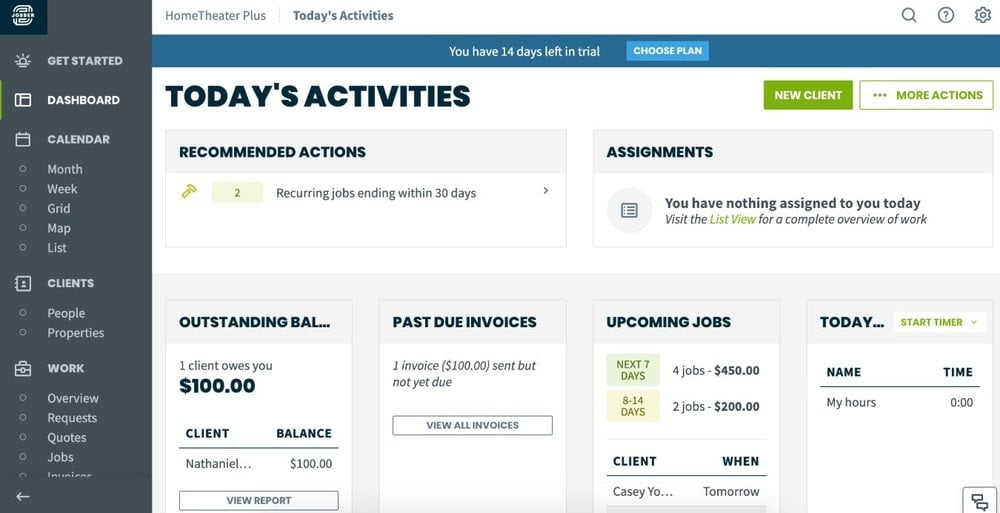
Jobber is a trusted name in the field service space, with a focus on making day-to-day operations easier through simple scheduling, quoting, and invoicing tools.
Key Features:
- Drag-and-drop calendar
- Job tracking and client communication
- Mobile access for teams on the move
Pros:
- User-friendly and easy to adopt
- Affordable for smaller teams
- Strong support
Cons:
- Lacks advanced marketing features
- Limited customization
User Feedback:
Ideal for solo electricians or small teams looking for straightforward job management without the bells and whistles.
CRM Option 3: Housecall Pro
Overview:
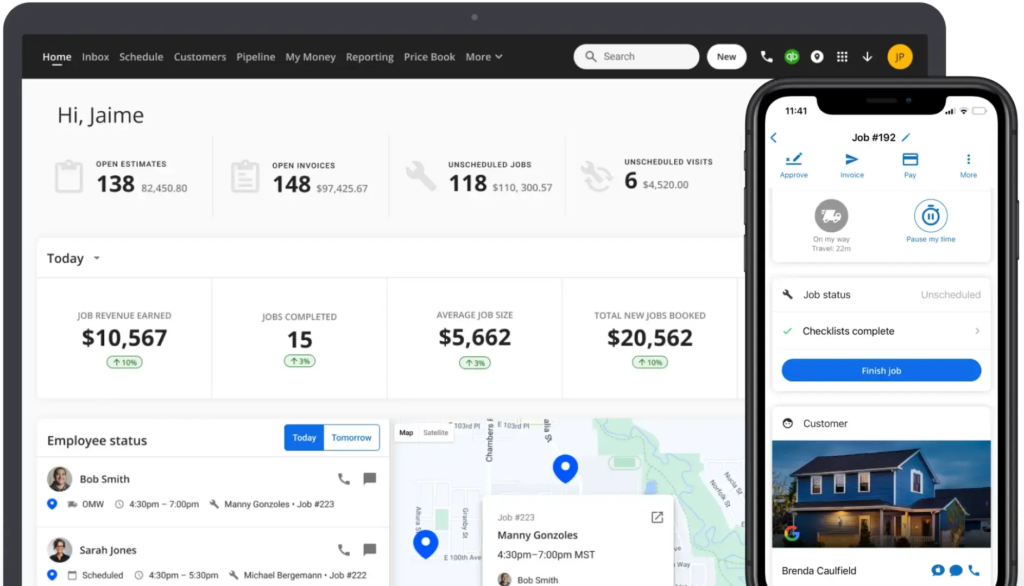
Housecall Pro brings a solid blend of job management and automation features with a clean interface. It’s built for service pros who want to streamline scheduling and customer communication.
Key Features:
- One-click job dispatch
- Customer text/email notifications
- Real-time GPS for techs
- Payment processing and QuickBooks sync
Pros:
- Good for mobile crews
- Built-in automations save time
- Helpful onboarding
Cons:
- Some features locked behind higher-tier plans
- Reporting tools could be stronger
User Feedback:
Great option for growing teams that want to digitize their workflow without feeling overwhelmed by the tech.
CRM Option 4: ServiceTitan
Overview:
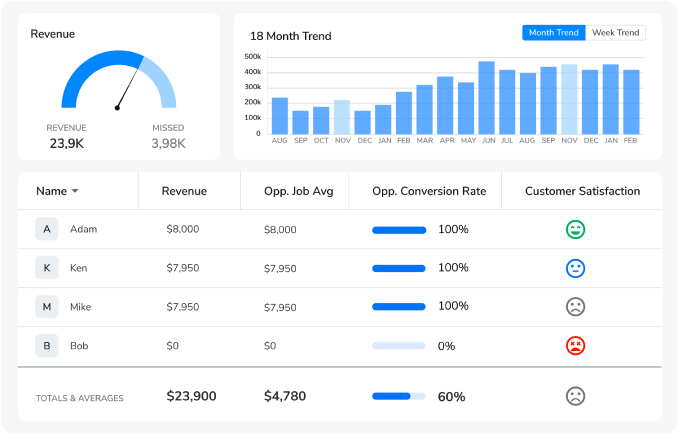
ServiceTitan is a premium platform built for large or scaling trade businesses. It’s packed with features but comes with a steeper price tag and learning curve.
Key Features:
- Deep analytics and KPI tracking
- Advanced technician management
- Integrated sales tools and call booking
Pros:
- Powerful toolset for larger teams
- Enterprise-level customization
- Excellent reporting
Cons:
- High cost
- Overkill for small-to-midsize businesses
User Feedback:
Best suited for established companies ready to invest in operational efficiency and long-term scaling.
CRM Comparison Table for Electrical Contractors
| CRM | Best For | Online Booking | Marketing Automation | Customization | Mobile App | Support Level | Pricing |
| Negosense CRM | Contractors who want leads delivered to their pipeline, automation, and growth in one system | ✅ Built-in | ✅ Advanced & done-for-you | ✅ High | ✅ Yes | ✅ Turnkey setup + premium support | Starts at $99/mo |
| Jobber | Small teams needing easy job tracking | ✅ Yes | ❌ Basic or external tools | ❌ Limited | ✅ Yes | ✅ Live chat + articles | Starts at $49/mo |
| Housecall Pro | Mid-sized teams who want scheduling + basic automation | ✅ Yes | ✅ Moderate | ❌ Limited | ✅ Yes | ✅ Onboarding support | Starts at $69/mo |
| ServiceTitan | Large or scaling businesses with complex needs | ✅ Yes | ✅ Advanced | ✅ High | ✅ Yes | ✅ Dedicated support | Custom pricing (high-end) |
How to Choose the Right CRM for Your Electrical Contracting Business
With so many CRM platforms on the market, the real challenge isn’t finding one—it’s choosing the right one. The best CRM isn’t necessarily the most expensive or the one with the most features. It’s the one that fits your business like a glove.
Here’s how to cut through the noise and make a smart, confident decision:
Assess Your Business Needs
Start with your day-to-day. Are you spending too much time chasing leads, managing quotes manually, or following up with clients? Do you need help with scheduling, or is marketing your biggest headache? Understanding where the bottlenecks are in your business helps clarify what features are essential—and which ones are just nice to have.
For example, if your team is constantly in the field, mobile access might be non-negotiable. If lead follow-up is inconsistent, automation should move to the top of your list.
Budget Considerations
While it’s tempting to focus on the monthly cost, a better question is: What’s the return? A solid CRM should save you time, bring in more work, and help you close jobs faster. In many cases, a system that costs a bit more upfront can pay for itself several times over by reducing admin overhead and boosting conversions.
Be cautious of hidden fees too—some platforms charge extra for features like text messaging, automation, or integrations you may need later.
Ease of Use and Training
No matter how powerful a CRM is, it won’t do much if your team dreads using it. Look for a platform with an intuitive interface and clean navigation. Bonus points if training and onboarding are included—especially if you’re busy running jobs and don’t have time to figure things out on your own.
Negosense, for example, takes a done-for-you approach so you don’t have to build anything from scratch. Others may offer tutorials or live support but leave implementation up to you.
Implementing and Making the Most of Your CRM
Choosing a CRM is just the beginning. To get real value from your investment, you need a smooth rollout and a plan to keep things running efficiently. A powerful system that’s never used properly is just as bad as not having one at all.
Here’s how to make sure your CRM becomes a core part of how you run your electrical business:
Training Your Team
Even the best software won’t help if your staff doesn’t know how (or why) to use it. Whether you’re managing a small crew or multiple teams, take time to walk them through the basics. Prioritize tools they’ll use daily—like job scheduling, notes, and customer communication—before diving into more advanced features.
For faster adoption, pick a CRM with a simple interface and clear documentation. If you’re using Negosense CRM, the onboarding is fully guided, so your team gets hands-on support from day one.
Regularly Updating Data
CRMs are only as useful as the information inside them. Make it a habit to keep job notes, contact details, estimates, and project statuses up to date. This ensures that everyone on your team has accurate information when they need it—and it prevents small mistakes from turning into big headaches.
You can also assign roles or permissions to make sure the right people are responsible for updating the right parts of the system.
Analyzing CRM Metrics
Most contractors overlook this step—but it’s where the gold is. Your CRM collects valuable data over time: which marketing sources bring in the most leads, which team members close the most jobs, how long it takes to turn a lead into a paying customer, and more.
By reviewing these insights regularly, you can spot inefficiencies, improve your sales process, and make smarter decisions about where to invest your time and money. If your CRM offers dashboards or reports (like Negosense does), make them part of your monthly check-in.
Conclusion: Take Control of Your Electrical Business
The right CRM doesn’t just organize your contacts—it helps you run a more efficient, more profitable, and more scalable electrical contracting business. From streamlining day-to-day tasks to closing more jobs and delivering a better customer experience, the benefits speak for themselves.
Whether you’re just getting started or ready to take your business to the next level, investing in a CRM tailored to electrical contractors is one of the smartest moves you can make.
And if you’re serious about growth? Don’t stop at just choosing the right system. Pairing your CRM with a professional website, strong SEO, and consistent lead generation will multiply your results—and that’s exactly what we do.
Let us handle the tech so you can focus on the tools.
Book a free strategy call to see how our done-for-you CRM setup, web design, SEO and digital marketing, and lead generation services can help you turn your electrical business into a growth machine.
Frequently Asked Questions About the Best CRM for Electrical Contractors
What is the best CRM for electrical contractors?
The best CRM for electrical contractors is one that helps manage leads, schedule jobs, send invoices, and automate customer communication. Solutions like Negosense CRM, ServiceTitan, Jobber, and Simpro are popular because they streamline operations and improve job tracking, lead follow-up, and client satisfaction.
Why do electrical contractors need a CRM?
CRMs help electrical contractors stay organized by keeping all client, job, and scheduling data in one place. This reduces missed appointments, follow-up failures, and paperwork errors—while also boosting efficiency and closing more jobs.
What features should I look for in a CRM for electrical contractors?
Look for these key features:
- Job and project management
- Scheduling and dispatch
- Mobile access for field techs
- Automated follow-ups and reminders
- Invoicing and quote creation
- Integrations with QuickBooks, email, and calendar tools
- Reporting and lead tracking dashboards
Is a CRM worth it for small electrical businesses?
Yes. Even solo electricians benefit from CRM software by reducing admin time, staying on top of leads, and offering more professional service. Many platforms offer affordable plans with the essential tools needed to grow.
How does the Negosense CRM compare to other CRMs?
Negosense CRM is built specifically for electrical contractors and other home service businesses. It offers built-in lead capture, automated follow-up, website integration, and marketing tools in one place—unlike generic CRMs that require multiple add-ons.