SEO & Content Marketing
SEO for Home Services in 2025
Why Most Contractors Stay Invisible (Even If They’re Great at What They Do)
If your phone isn’t ringing — it’s not because you’re bad at your job.
It’s because no one can find you.
Somewhere in your town, a contractor with an outdated website, blurry photos, and no social media is booked solid.
Why?
Because when people search, he shows up.
You don’t.
You’ve probably heard the usual advice:
“Just set up a website.”
“Content is king.”
“SEO takes time.”
Cool. But none of that matters if you’re invisible online and your site doesn’t convert traffic into jobs.
This guide isn’t another SEO checklist.
It’s your 2025-level playbook — built for HVAC pros, landscapers, plumbers, electricians, and anyone who runs an appointment-based business.
If you’re tired of guessing, tired of being outranked, and ready to turn your online presence into booked-out weeks — you’re in the right place.
Let’s break the cycle, and build something that books jobs on autopilot.
Where SEO Fits in the Bigger Picture
Why SEO Alone Doesn’t Work — and What to Do First
Let’s get something straight: SEO is not your starting point.
It’s the amplifier — not the engine.
Here’s the truth most marketers won’t tell you:
- If your offer isn’t compelling, SEO won’t save you
- If your site confuses people, rankings won’t convert
- If you don’t follow up, you’re just burning leads
You don’t need traffic.
You need a system that turns traffic into revenue.
That system? It’s built on the 4C Growth Engine:
The 4Cs That Drive Sustainable Growth:
- Clickability – Get discovered. SEO, paid ads, and local search visibility.
- Credibility – Build trust fast. Reviews, clean branding, and consistent messaging.
- Convertibility – Turn visits into action. Strong offers, high-converting pages, and clear CTAs.
- Consistency – Keep it going. Automations, retargeting, referrals, and retention.
SEO sits in the Clickability layer — it brings attention.

But if Credibility, Convertibility, and Consistency aren’t in place, that attention leaks out the back of a broken funnel.
So if you’re wondering whether to start with SEO, ads, or a new website — here’s the play:
- Nail your offer – Are you solving a real problem?
- Fix your website – Does it build trust and drive action?
- Then layer on SEO – Scale attention once you’re ready to convert it
You don’t need to guess the order anymore.
This is the blueprint.
Also worth reading:
- The 4C Growth Engine: How to Scale Your Home Service Business
- How to Build a High-Converting Website for Local Services
- Lead Conversion Playbook: What Happens After Someone Calls?
What’s Changed in 2025 (And Why It Matters More Than Ever)
If you’re still doing SEO like it’s 2015 — publishing long blogs, chasing backlinks, and stuffing keywords — you’re going to lose. Here’s why:
1. AI Is the New Front Page
Google’s AI Overviews (AIOs) now show up on 1 in 5 searches — and climbing. They answer questions before anyone visits your site. That sounds like bad news… but it’s not.
These overviews often cite websites that aren’t ranking in the top 10 — meaning you can leapfrog bigger competitors if your content is specific, helpful, and local.
Examples:
- “Why is my furnace leaking water in Minneapolis?”
- “Best time of year to reseed lawns in Ohio”
If you write to answer, not just to rank, you’re in the game.
2. Zero-Click Searches Dominate
Most searches now end without a click. But here’s the upside: visibility still builds trust — especially in the map pack and featured snippets.
That’s why we focus on visibility and conversion systems — not just traffic. If people recognize your name, they’re more likely to call when they are ready.
3. Forums Are Winning (Yes, Really)
Google now surfaces Reddit, Quora, and niche forums higher than ever. People want real experience, not corporate content.
That means your content should feel like a conversation — not a brochure. And yes, you should be answering questions in forums to earn trust and links.
We call this Experiential SEO, and it’s changing how smart local businesses create content.
4. Answer Engine Optimization (AEO) Is the Future
AI search tools like ChatGPT, Perplexity, and Bing AI cite sources — and those citations drive real traffic.
If your site offers clear, concise, structured answers, you can win placement in these tools — even if you’re not ranking on Google yet.
No keyword stuffing. Just answers that get cited, clicked, and trusted.
Want the full breakdown on how SEO is evolving in 2025? Read the 2025 SEO Playbook for Local Service Businesses.
No Traffic. No Leads. No Problem.
What to Do When You’re Starting from Scratch
No need to panic. You don’t need a blog empire, a $10K website, or backlinks from Forbes.
If you’re a contractor with zero traffic and no marketing setup — here’s your no-fluff game plan.
This isn’t about getting ranked eventually. This is about getting found fast, looking legit, and turning clicks into calls.
Step 1: Own Your Local Visibility
Set up your Google Business Profile (GBP)
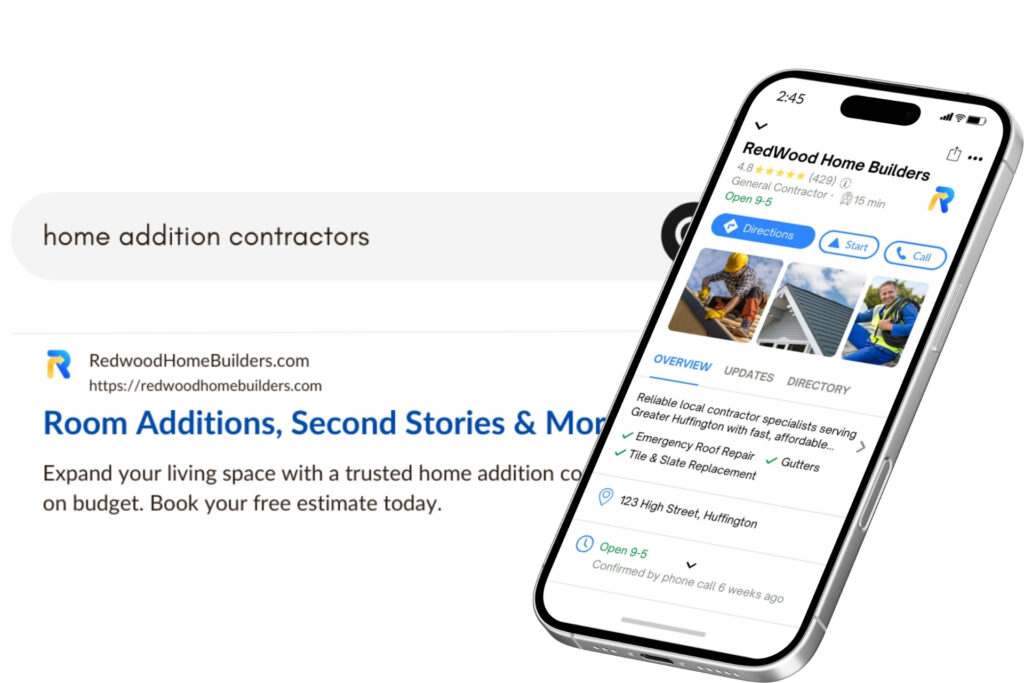
This is the most important free lead source in 2025. If you’re not showing up in the map pack, you’re invisible.
Checklist:
- Business name, address, and phone (NAP) are accurate
- Add multiple service areas, not just your city
- Upload real photos of your work and team
- Get 5+ reviews from happy customers ASAP
- List all your services (with custom descriptions)
Need help? Use our full GBP optimization guide
Step 2: Set Up Tracking From Day One
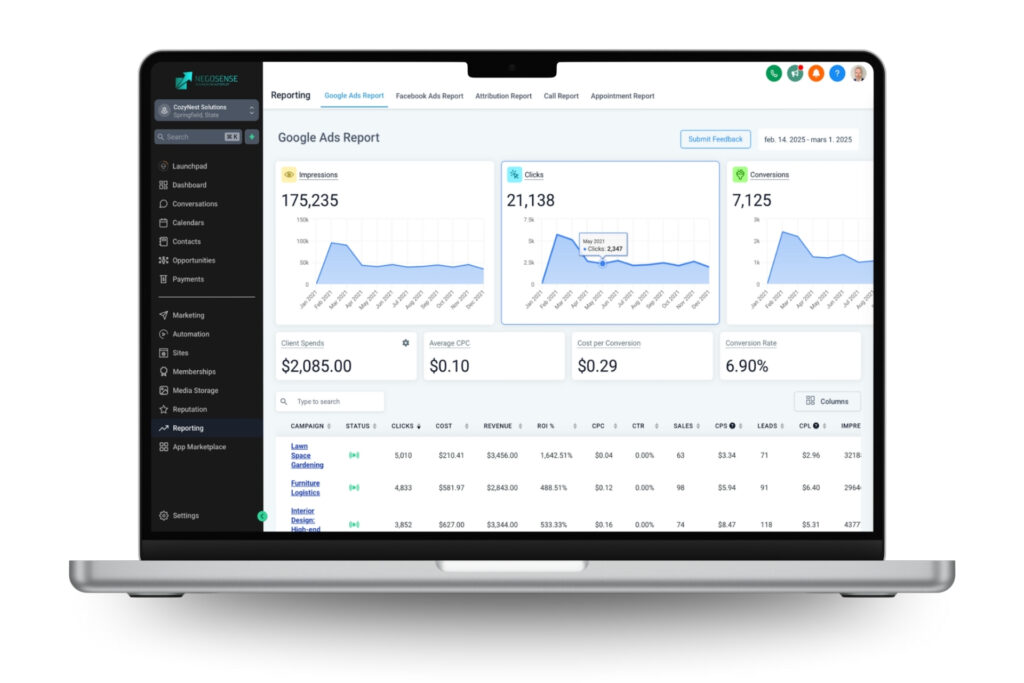
Before you spend time or money on marketing, make sure you can measure it.
Install these (they’re free):
- Google Analytics 4
- Google Search Console
- Call tracking (even Google Voice will do to start)
Without tracking, you’re flying blind.
Step 3: Launch a Minimum Viable Website (MVW)
You don’t need a custom design — just a clean, mobile-optimized site that gets the job done.
Your MVW should:
- Load fast on phones
- Show exactly what you do and where
- Have click-to-call and easy booking buttons
- Answer 1–2 key FAQs (like “Do you offer same-day service in [city]?”)
Pro Tip: Use a drag-and-drop CRM builder like the Negosense CRM for home services to launch in hours, not weeks.
Step 4: Build 3–5 Local Citations
Forget national directories for now. Focus on real local authority.
Start with:
- Your Chamber of Commerce
- Local business directories
- Partner businesses (ask them to link to you)
Google values consistency. Just a few trusted mentions can build local authority fast.
Step 5: Automate a Review Request System
Make reviews part of every job — not something you “get around to later.”
- Ask after every completed service
- Use SMS if possible (gets 3x more responses)
- Automate it through your CRM if you have one
You could easily see reviews triple in 30 days just by switching to text-based requests.
Bottom Line
You don’t need to master SEO right now.
You just need:
- Local visibility
- A site that builds trust and drives calls
- A few signals that show Google (and customers) you’re the real deal
Once that’s in place, then it makes sense to scale with SEO.
Up next: How to Know if Your SEO Is Actually Working — or Just Burning Time
Is Your SEO Actually Working — or Just Burning Time?
You’ve done “SEO.” You’ve posted blogs. You’ve added keywords.
Maybe you even hired an agency that sends you pretty reports.
But here’s the question that really matters:
Is your phone ringing more?
If not, here’s how to quickly tell whether your SEO is driving real results — or just checking boxes.
1. Are You Showing Up for Real Searches?
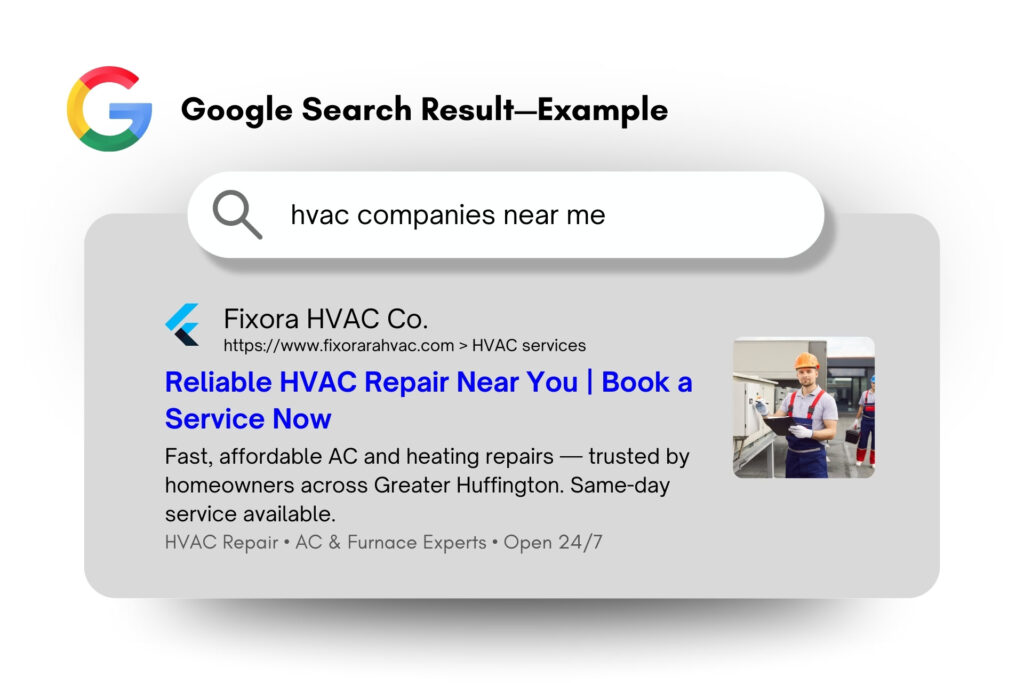
Go incognito and search:
“[Your service] in [Your City]”
Look for two things:
- Are you in the map pack?
- Are you on page 1 of organic results?
If not, your SEO strategy is missing the mark. Don’t overanalyze — you’re either visible or you’re not.
2. Are You Getting the Right Visitors?
Traffic doesn’t mean anything if it’s not from people who need your service.
Check Google Search Console:
- Are people landing on your service pages?
- Are they searching terms like “emergency AC repair” or “landscaper near me”?
If most traffic is going to blogs or non-local pages, your SEO is optimized for curiosity — not conversions.
3. Are Any Pages Pulling Their Weight?

You should know which pages:
- Are bringing in traffic
- Are ranking for valuable keywords
- Are converting visitors into calls
If you’re guessing, you’re flying blind. Tools like Search Console or SurferSEO make this easy to check — no spreadsheets needed.
4. Is Your Site Fast?
Slow site = lower rankings + lost leads.
Run your homepage through PageSpeed Insights.
- Mobile score under 70? You’re losing customers before they see your headline.
- Anything red = fix it.
5. Are You Getting Any Real Backlinks?
Forget Fiverr or spammy directories. What you need:
- Links from local blogs
- Mentions on community or trade sites
- Partners or suppliers linking to you
One quality backlink can beat 100 junk ones.
6. Do People Say “I Found You on Google”?
This is the ultimate litmus test.
Ask every new lead: “How did you find us?”
If they’re not saying Google, there’s a visibility or trust gap.
Bonus: start tracking this in your CRM — even a basic tag helps reveal patterns.
7. Are You Hitting Revenue Goals?
This is where it all comes together.
If your SEO isn’t helping you:
- Book more jobs
- Increase average ticket size
- Grow monthly revenue
…then it’s just a cost, not an asset.
That’s why we track every metric through our 4C Growth Engine — to tie traffic to revenue, not vanity stats.
SEO should bring in calls, not just clicks. If you’re not seeing leads and revenue, it’s time to rework the strategy — or the team.
Want the Fast Answer?
Book a quick strategy session — we’ll show you what’s broken and how to fix it, fast.
Search Intent 101 for Contractors
Why Your Website Might Be Ranking — But Still Not Converting
Here’s the truth about SEO that most agencies won’t tell you:
You don’t need to rank for more keywords.
You need to rank for the right ones.
Because not every click is created equal.
Some people are just browsing.
Some are comparing options.
Some are ready to pick up the phone right now — and if you don’t meet their intent, you’re out of the running.
This section is about making sure your content shows up when money is on the table.
The 3 Types of Intent That Matter for Home Service Businesses
Understanding intent is important for both SEO and PPC for home service businesses. Forget the jargon. Here’s what you actually need to understand:
1. Transactional Intent
“I need this service now.”
These are your money keywords:
- “emergency plumber in Denver”
- “HVAC company open Saturday”
- “best roof repair near me”
These people don’t want to “learn more.” They want to hire someone.
Make sure your homepage and service pages are optimized for these terms.
Include:
- Phone numbers in the header
- Location-specific service areas
- Clear calls to action
You’re not writing for clicks. You’re writing to get hired.
2. Commercial Intent
“I’m comparing options.”
These searchers are in the research phase:
- “top-rated electricians in Austin”
- “Trane vs Carrier HVAC”
- “do plumbers offer free quotes?”
They’re not cold — but they’re not ready to book yet.
This is where your blog, comparison pages, and FAQs come in.
You want content that:
- Educates clearly
- Builds trust
- Proves authority (e.g., certifications, reviews, guarantees)
And yes — this is where you drop subtle CTAs like:
“Need help deciding? Book a free consult.”
3. Informational Intent
“I’m looking for advice.”
This is where most businesses waste time. They create endless “what is HVAC” or “5 tips for landscaping your yard” articles that never convert.
Here’s when informational content actually works:
- When it’s tied directly to your services
- When it answers location-specific, service-specific questions
- When it’s built for Answer Engine Optimization (AEO)
Example:
“Why is my air conditioner leaking water?”
→ Good topic. It implies an urgent issue, and the next step is usually hiring someone.
But “how does air conditioning work”?
→ Waste of time. They’re not hiring anyone.
Use tools like:
- AnswerThePublic
- Google’s “People Also Ask” box
- Keywords Everywhere
These will show you what people are actually asking — and how they ask it.
Use Intent to Map Your Site Like a Funnel
Think of each page on your site like a touchpoint in a conversation:
- Service pages = “We do this. Here’s where. Call now.”
- Blog posts = “Here’s the info. Also, we can help.”
- FAQs & comparisons = “You’re wondering about this? Here’s the answer — plus our offer.”
If a page doesn’t have a clear purpose that matches user intent — rewrite it or delete it.
Tools & Tactics That Won’t Waste Your Time
The Only Stack You Need to Rank, Convert, and Grow in 2025
You don’t need 20 tools. You need five that actually move the needle.
Here’s the lean setup we recommend — and why it works.
Google Business Profile
Still the #1 free tool for local visibility. Show up in the map pack, collect reviews, and look legit at a glance.
Google Search Console
See how people are finding you (or why they’re not). Spot ranking issues, submit content, and track what’s working — all free.
BrightLocal
Track how you rank by ZIP code, not just keywords. Great for monitoring map pack placement and local competition.
SurferSEO
Write pages that actually rank. Stop guessing what Google wants — this tells you how to structure content that wins.
A CRM That Does More Than Store Contacts
A lot of CRMs track leads. Fewer help you convert them.
The best ones tie your marketing together — from reviews to follow-ups to landing pages — and make your pipeline predictable.
That’s why we built the Negosense CRM for home services around the 4C Growth Engine:
- Clickability – Make sure people find you when they search
- Credibility – Build trust with reviews, fast sites, and consistent info
- Convertibility – Turn interest into action with great landing pages and follow-up
- Consistency – Automate the stuff that keeps growth compounding
If your current CRM doesn’t help you rank higher or book more jobs, it’s time to upgrade — even if you start small.
Need help finding the right CRM for your business? Check out The Ultimate Guide to CRM for Home Services.
What You Don’t Need:
- Expensive SEO tools
- “Just write more blogs” advice
- Reports with zero ROI
Your 30-Day SEO Action Plan
Week-by-Week Moves to Go From Invisible to Booked Solid
This isn’t a content marathon. It’s a focused sprint to make sure people can find you, trust you, and call you.
Week 1: Get Findable
- Set up or optimize your Google Business Profile
- Lock in NAP (Name, Address, Phone) across your site and key directories
- Claim 3–5 local citations (Chamber of Commerce, Yelp, BBB)
- Run your homepage through PageSpeed Insights — fix anything red
Goal: Google knows what you do, where you do it, and that you’re legit.
Week 2: Build Authority
- Write (or improve) one strong service page for your #1 offer
- Add FAQs, photos, and location-specific keywords
- Set up Google Search Console
- Ask 3 recent customers for Google reviews
Goal: You’ve got a page worth ranking — and proof to back it up.
Week 3: Stack Local Content
- Write one blog post answering a real, local question
- Link it to your main service page
- Share it on your Google Business Profile
- Answer one forum or Reddit post (non-spammy, helpful, link back if relevant)
Goal: Build relevance, trust, and activity around your site.
Week 4: Optimize and Track
- Check Search Console for early keyword wins
- Use BrightLocal to track rankings by ZIP code
- Add click-to-call buttons, visible contact info, and clear CTAs to all key pages
- Set a reminder to review results monthly
Goal: Turn early visibility into ongoing results — and keep improving.
Too Busy to Do This Yourself?
We get it. You run the business. You don’t want to play webmaster or keyword nerd.
Here’s what we offer:
- Done-for-you SEO setup
- Home services PPC-campaigns
- Monthly optimization packages
- Or just book a strategy call and let’s see if you’re a fit
We build systems that drive traffic, convert leads, and compound growth — all within our 4C Growth Engine. No fluff. No lock-in contracts. Just results.
Ready to Rank Higher and Book More Jobs? Let’s Talk.
You’ve Got Two Options Right Now
Option 1: You close this tab, keep grinding, and hope something starts working.
Option 2: You get a team behind you that knows how to make this stuff pay off — fast.
This guide laid out the exact framework we use to help home service businesses go from invisible to booked out. But let’s be real: SEO isn’t a checklist. It’s a system.
And if you want a system that:
- Brings you inbound leads every week
- Builds your local reputation and authority
- Works in the background while you run your business
Then we should talk.
Here’s what happens next:
- Book a free strategy call → Book here
- We audit your current site and rankings
- We map out a plan — custom to your service, location, and goals
- You decide if you want us to build it for you, or give you the blueprint to run it in-house
No pressure. No BS. Just real marketing strategy that helps real businesses grow.
FAQ
1. How long does SEO take to work?
Most local businesses see early traction in 30–60 days, with stronger results in 3–6 months — especially if you’re starting from zero. Want it faster? Get your free SEO audit.
2. Should I start with SEO or ads?
Need leads now? Run ads.
Want leads long-term? Invest in SEO.
The sweet spot? Do both — with one system that tracks everything.
3. What’s the #1 SEO priority for home service businesses in 2025?
Trust signals: reviews, fast-loading pages, clear service info, and a solid Google Business Profile. Nail those, and you’re ahead of 90% of the market.
Articles Related to SEO for Home Services
- The Ultimate Guide to Digital Marketing for Home Services
- The Ultimate Guide to CRM for Home Services
- Home Services Advertising in 2025: Proven Strategies to Outperform Your Competition
- Unlock More Jobs with Smart Email Marketing
- SEO for Home Services in 2025
- How Content Marketing Can Help Your Home Service Business Grow in 2025