Marketing Strategy
Roofing Marketing Strategies That Work in 2025
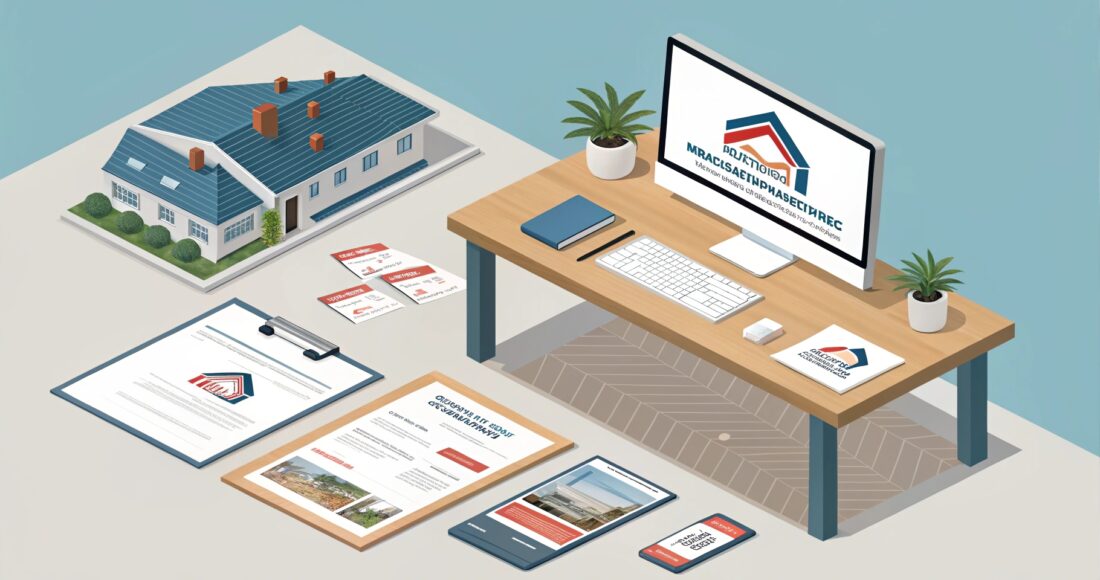
If you’re running a roofing business in 2025, one thing is clear: just being great at what you do isn’t enough anymore. Whether you’re a seasoned roofer or just starting out, you’re competing with dozens of other contractors in your area — and the ones winning the jobs aren’t always the best roofers… they’re the best marketers.
This guide is built specifically for roofing contractors who want to grow. We’ll break down everything you need to know about roofing marketing — from getting more leads and ranking higher on Google, to running profitable ads and turning your website into a lead-generation machine.
And the best part? You don’t need to be a tech expert to put this into action. Whether you handle your marketing yourself or hire a roofing marketing agency, this post will show you exactly what works — and what to avoid — in 2025.
Why Roofing Marketing Matters More Than Ever
From Word-of-Mouth to Google Search
Ten years ago, most roofing jobs came from referrals, word-of-mouth, or someone driving by your truck on the job. Fast-forward to today — over 97% of homeowners search online before choosing a contractor. If you’re not showing up when they Google “roofing company near me,” your competition is gladly taking the job instead.
Even referrals are now being double-checked. Potential customers will Google your business name, check your reviews, scroll through your website, and compare you to other roofers in their area before they even pick up the phone.
If your online presence is weak or outdated, you’re losing leads before you even know they existed.
Marketing Creates Predictable Growth
Good marketing isn’t just about “getting your name out there.” It’s about building a repeatable, predictable system for bringing in leads — so you’re not relying on slow seasons, luck, or another round of flyers.
Roofing marketing done right can help you:
- Fill your schedule with quality leads
- Increase close rates with the right customers
- Charge higher prices by building trust and authority online
- Scale your business without burning out
Whether you’re a solo roofer or running a full crew, the right marketing strategy gives you more control, more consistency, and more profit.
And the best part? You don’t need to be a tech expert to put this into action. Whether you handle your marketing yourself or hire a roofing marketing agency, this post will show you exactly what works — and what to avoid — in 2025.
We’ll cover roofing marketing in a broad sense here — including SEO, lead generation, web design, PPC ads, and social media — but if you want to dive deeper into a specific strategy, we’ve linked out to separate in-depth guides throughout the post.
Lead Generation for Roofing Companies
If your phone isn’t ringing consistently, your marketing isn’t working — period. Roofing is a high-ticket, high-trust service, and that means your lead generation strategy has to be dialed in. Whether you’re targeting homeowners or commercial property managers, the way you capture, qualify, and follow up with leads can make or break your business.
This section walks you through what makes roofing lead gen unique, the different types of lead generation, and how to build a system that fills your pipeline with real opportunities — not tire-kickers.
What Makes Roofing Lead Gen Unique
Roofing leads aren’t like leads in other industries. Most of your customers:
- Need service fast (storm damage, leaking roofs)
- Only replace a roof once every 10–20 years
- Don’t understand roofing well enough to compare quotes beyond price
That means two things:
- You need to show up the moment they start searching
- You must build trust quickly to win the job
Timing, visibility, and credibility are everything.
Inbound vs. Outbound Lead Generation
Both work — but the strategy depends on your goals and resources.
Inbound lead gen brings people to you:
- Google searches (local SEO)
- Facebook ads
- Blog posts and how-to content
- Online directories
Outbound lead gen is when you go to them:
- Cold calls and door knocking
- Direct mail campaigns
- Email outreach
- Buying leads (e.g., from HomeAdvisor — use with caution)
Inbound leads tend to be more qualified and easier to close. Outbound can work, but it usually requires more effort and persistence.
The best roofing businesses run both—with automated systems doing the heavy lifting.
Capture & Convert with Proven Tactics
It’s not just about getting traffic — it’s about converting visitors into real opportunities. Here’s how to optimize your lead generation funnel:
- Offer a strong call to action – e.g., “Free Inspection,” “Instant Estimate,” or “Book a Roof Checkup”
- Use dedicated landing pages for different services and service areas
- Keep your forms simple — name, phone, address, and a brief message is usually enough
- Automate your follow-ups – use a CRM to text or email leads instantly after they submit a form
Pro tip: Response time matters. The roofer who responds first usually wins the job.
SEO for Roofers: Rank Higher, Get Found Faster
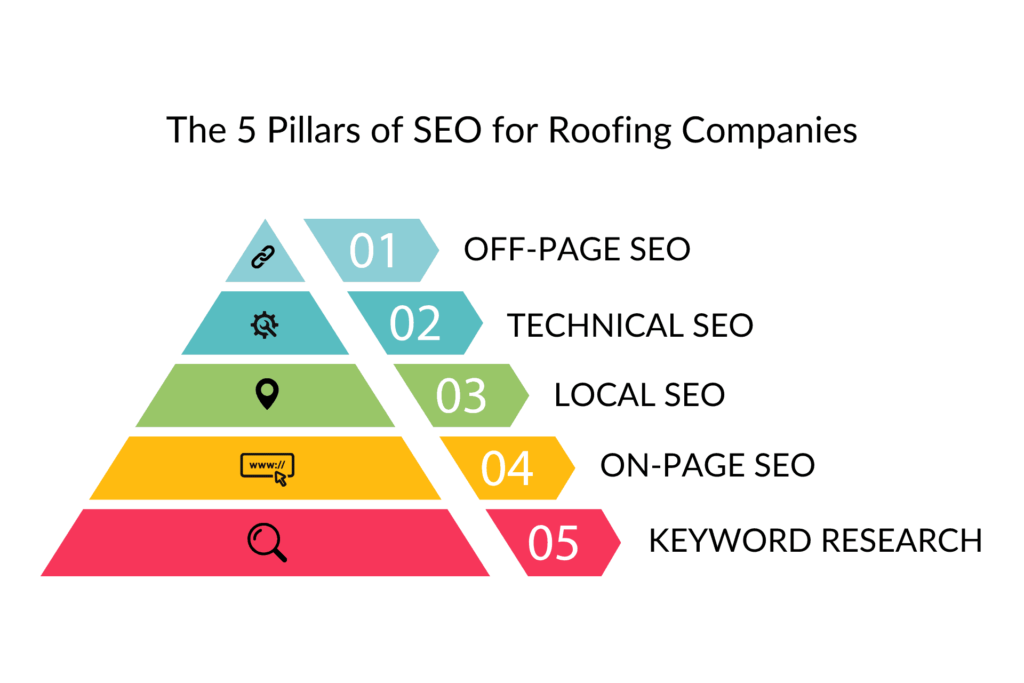
When homeowners or property managers search for a roofer, they don’t scroll through pages of results. They call the top few businesses that show up — often without even clicking past the map. That’s why Search Engine Optimization (SEO) is one of the most powerful long-term investments you can make as a roofing contractor.
Done right, SEO brings in free, high-quality leads every month — without relying on paid ads or third-party lead sellers.
Local SEO: Get on the Map (Literally)
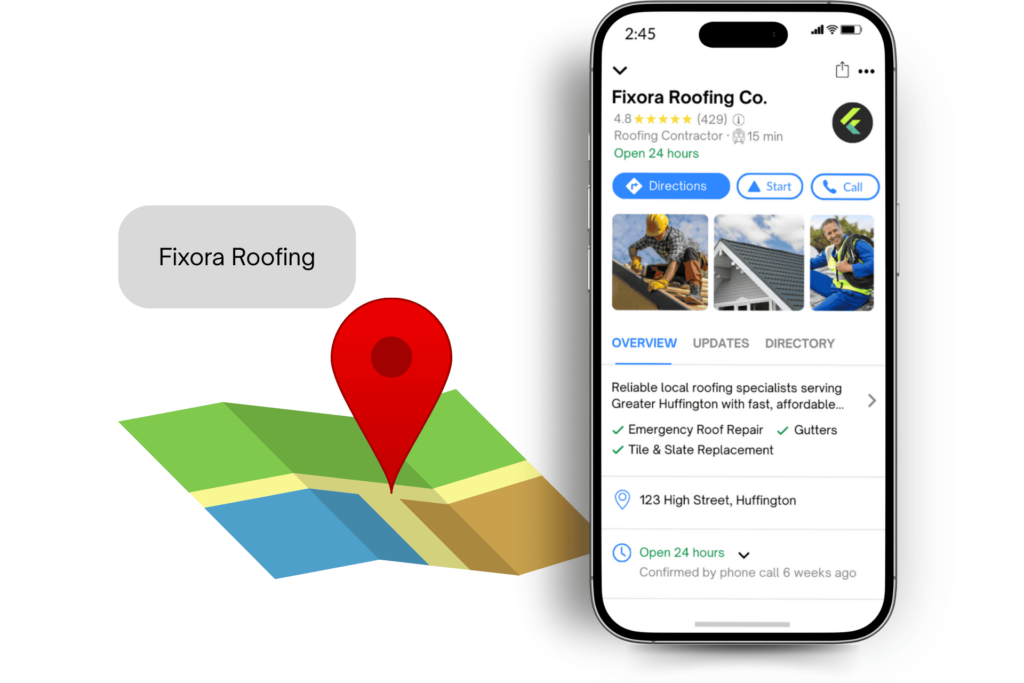
The most valuable digital real estate for roofers is the Google Map Pack — those top three listings that show up under the map when someone searches for a term like “roofing company near me.”
To get there, you’ll need to:
- Claim and fully optimize your Google Business Profile
- Add service areas, business hours, and high-quality photos
- Collect consistent 5-star reviews (and respond to them)
- Use local keywords in your service page titles and descriptions
- Example: “Asphalt Roof Replacement in Austin, TX”
Google rewards relevance and consistency. The more detailed and accurate your online presence, the higher you’ll rank.
On-Page SEO: Make Your Website Work for You

Your website isn’t just an online brochure — it’s your 24/7 sales rep. But if Google can’t understand it, customers won’t find it.
Here’s how to make sure your site is optimized for search:
- Use targeted keywords in your page titles, meta descriptions, and headers
- Example: “Roof repair in [City],” “Affordable roof replacement,” etc.
- Create separate pages for each core service and location you serve
- Don’t cram everything onto one homepage
- Ensure fast load speeds and mobile responsiveness
- Over 60% of searches happen on mobile — if your site’s slow, they bounce
Think of your website like a job site: clean, well-structured, and built to perform.
Blogging & Educational Content: Build Trust and Visibility

Blogging isn’t just for tech companies. Roofers who publish helpful content consistently get more traffic — and more leads.
Examples of high-performing blog topics:
- “How to Know If You Need a New Roof”
- “What to Do After a Hailstorm Damages Your Roof”
- “Roofing Material Comparison: Asphalt vs. Metal”
This kind of content answers real questions, positions you as an expert, and gives Google more pages to rank. Bonus: It also gives your social media and email campaigns valuable content to share.
Want a complete step-by-step guide to get your roofing business ranked on Google?
Check out our full post: SEO for Roofers: How to Rank #1 in Your Local Area.
PPC Advertising for Roofers: Generate Leads On-Demand
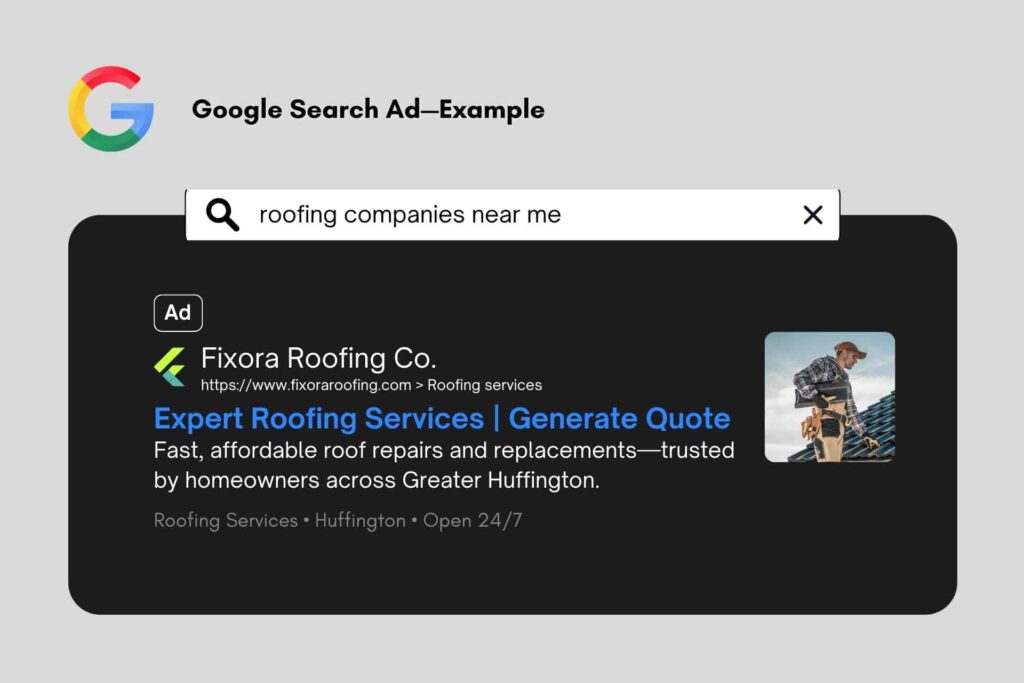
While SEO builds momentum over time, Pay-Per-Click (PPC) advertising gives you the ability to show up at the top of search results right now. With the right targeting and messaging, PPC can deliver consistent roofing leads—even in slow seasons or brand-new markets.
Whether you’re running Google Ads, Facebook Ads, or Local Services Ads (LSAs), paid traffic lets you skip the line and reach homeowners actively looking for your services.
Google Search Ads: Target High-Intent Homeowners
When someone types “emergency roof repair near me” into Google, you want to be the first name they see.
Google Ads let you bid on keywords like:
- Emergency roof repair
- Roof replacement cost in [City]
- Commercial roofing contractors near me
To make it work:
- Focus on keywords with buyer intent
- Use compelling ad copy that builds urgency and trust
- e.g., “Free Estimates. Same-Day Roof Inspections. Locally Trusted Since 2010.”
- Send clicks to a dedicated landing page with a quote form or booking button — not your homepage
You’re not just buying clicks. You’re buying a shot at the right customer at the right time.
If you’re interested in diving deeper into Google ads, check out this article: Roofing Google Ads: Generate More Leads with PPC for Roofers
Facebook & Instagram Ads: Build Awareness and Stay Top-of-Mind
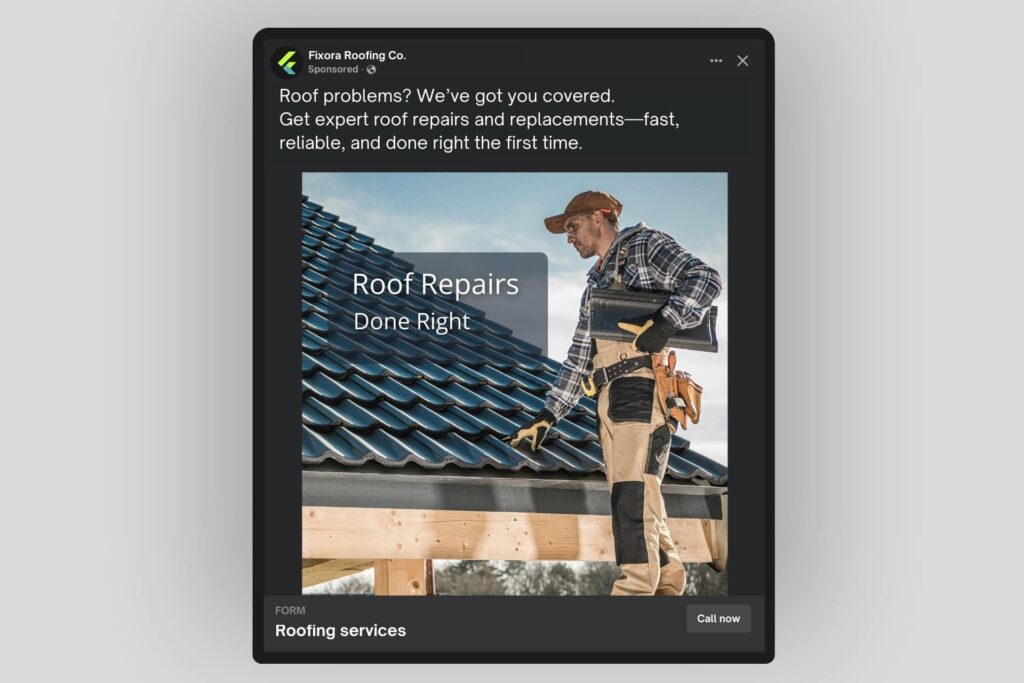
Social media ads aren’t about showing up in a search — they’re about getting in front of the right people before they need you, then staying top-of-mind when they do.
Smart ways to use social ads as a roofer:
- Run video walkthroughs of completed projects
- Promote seasonal offers like spring roof inspections
- Use retargeting ads to follow up with website visitors who didn’t convert
You’re not just selling a roof — you’re selling peace of mind. Social ads give you a chance to build that emotional connection.
Set a Budget, Track Results, and Scale What Works
PPC is only as good as your tracking. Without proper setup, it’s easy to burn money on clicks that don’t convert.
At a minimum, you should be:
- Tracking calls, form submissions, and booked jobs
- Monitoring your cost per lead (CPL) and return on ad spend (ROAS)
- Testing different ad copy, landing pages, and offers to improve performance
A roofing marketing agency can help set all this up — or if you’re managing ads yourself, consider tools like CallRail and Google Tag Manager to track results properly.
Want a deeper dive into roofing PPC?
Don’t miss our full guide: Google Ads & PPC for Roofers: A No-Fluff Playbook
Need someone to handle your advertising? We specialize in PPC for home services.
Social Media Marketing for Roofing Companies
Social media isn’t just for influencers and food pics — for roofing companies, it’s a powerful tool to build credibility, stay visible in your community, and differentiate yourself from fly-by-night competitors.
You may not always get leads directly from social platforms, but when people see your name online, check your work, and read your reviews, they’re more likely to trust you when they need help.
Be Where Your Customers Are
For most roofers, the best-performing platforms are:
- Facebook — great for community engagement, reviews, and retargeting
- Instagram — visual storytelling, before/after shots, short videos
- TikTok (optional) — ideal for short, educational or behind-the-scenes content if you’re targeting homeowners under 45
Focus your efforts on 1–2 platforms where your ideal customers already spend time.
What to Post (Without Making It a Full-Time Job)
You don’t need to go viral. You just need to stay relevant and visible. Here’s what works:
- Before & after photos from recent jobs (great for trust-building)
- Time-lapse videos of a roof install or tear-off
- Short “explainer” clips: Why flashing matters, spotting hail damage, etc.
- Behind-the-scenes content — crew intros, project walk-throughs
- Customer testimonials (video or text overlays)
Use a simple mix of educational, promotional, and personal content to build familiarity and trust.
Make It Work Without Wasting Time
You don’t have to post every day to make an impact — but you do need to be consistent.
- Use scheduling tools like Metricool or Buffer to batch content
- Repurpose content: a job site video can become a reel, story, and Facebook post
- Assign one person to snap pics and quick videos on-site — even a foreman with a phone works
Pro tip: Tag customers (with permission), use location hashtags, and always include a call to action — even if it’s just “Call us before the next storm hits.”
Build Authority Over Time
Even if you don’t see instant leads from social, it supports every other part of your marketing:
- Reinforces your Google reviews and SEO
- Makes your ads and website feel more legit
- Helps you stand out from low-effort competitors
A roofer with a clean, active profile showcasing real work will always have the edge over a faceless company.
Want help planning your content?
Read our full guide: Social Media Marketing for Roofing Companies: Simple Strategies That Build Trust
How a CRM Like the Negosense CRM Supercharges Your Roofing Marketing
You can have the best website, run the best ads, and show up #1 on Google — but if you’re not capturing, following up, and converting leads consistently, you’re leaving money on the table.
That’s where a CRM (Customer Relationship Management system) comes in — and for roofers, a tailored CRM like Negosense isn’t just helpful… it’s essential.
What a CRM Actually Does for Roofers
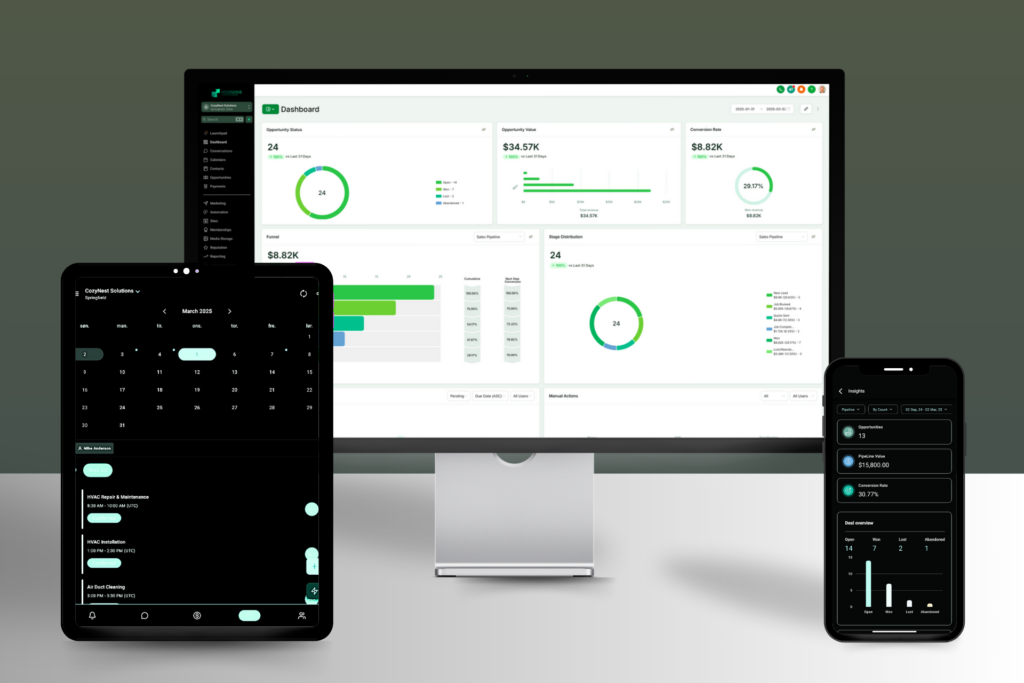
Most roofing contractors think of a CRM as a tool for tracking jobs or customer info. But when used right, it becomes the central hub of your entire marketing system.
Here’s what the Negosense CRM helps you do:
- Capture every lead automatically from your website, forms, phone calls, and ads
- Send instant follow-ups via email or text (no more lost leads or slow responses)
- Track where leads are coming from (Google, Facebook, word of mouth, etc.)
- Stay on top of estimates, appointments, and job status in one clean dashboard
- Automate review requests after jobs are complete
- Retarget cold leads with pre-built nurture sequences
It turns your chaotic lead flow into a streamlined, repeatable system.
Why It Matters for Marketing
Most roofers don’t have a lead problem — they have a follow-up and organization problem.
The average contractor responds hours (or even days) after a lead comes in. By then? That customer has already called someone else.
With a system like Negosense:
- Every lead gets a response within seconds
- No lead slips through the cracks
- You can see, at a glance, which campaigns are working and which aren’t
- You can scale confidently — knowing your marketing engine is built for growth
Marketing brings people to your business. Your CRM helps you convert them into customers.
The Negosense CRM stands out among the best CRMs for home services with its marketing and field service automation suite.
Book a free call and we’ll show you how we connect your website, ads, reviews, and lead tracking — all in one place.
Should You Hire a Roofing Marketing Agency?
At some point, every roofer faces the same question:
Should I keep trying to figure this marketing stuff out myself — or hire someone to handle it for me?
There’s no one-size-fits-all answer. It depends on your time, your budget, and how fast you want to grow. But if you’re wearing all the hats — quoting jobs, managing crews, chasing invoices — then your marketing is either getting pushed to the back burner or costing you more time than it should.
Let’s break down when it makes sense to outsource and what to look for if you do.
DIY vs Done-For-You Marketing: The Trade-Offs
Doing it yourself gives you control and saves money upfront. But it comes with a learning curve — and if you don’t know what’s working (or what’s broken), it can eat up hours and deliver nothing.
Hiring an agency means:
- Your marketing is handled consistently
- You get expert-level strategy and execution
- You can focus on jobs and clients instead of ads and analytics
If you’re serious about scaling or just want marketing off your plate, outsourcing can save you time and bring in more predictable revenue.
What to Look For in a Roofing Marketing Agency
Not all agencies are built for trades. You want a partner that understands roofing, speaks your language, and has a clear system — not someone trying to “figure it out” on your dime.
Here’s what to look for:
- Industry experience – Have they worked with roofers before? Do they understand seasonality, emergency calls, and high-ticket sales?
- Transparent pricing and reporting – You should never be guessing what’s being done or whether it’s working
- Services tailored to contractors – At a minimum:
- SEO & Google Business Profile optimization
- Google Ads + Local Services Ads
- Website design built to convert leads
- CRM integration for tracking and follow-ups
- Reputation management and review generation
Avoid the cookie-cutter agencies that offer 50 services to 50 industries — or worse, try to lock you into long contracts without delivering results.
Thinking about getting help with your marketing?
Let’s talk. Book a free call and we’ll show you exactly what’s working in your local market — and what your competition is missing.
Roofing Marketing Ideas for 2025
Tired of hearing the same recycled marketing tips? In 2025, standing out requires more than just running ads or asking for reviews — it’s about finding creative ways to stay visible, build trust, and stay ahead of your competitors.
Here are fresh, actionable marketing ideas for roofers that go beyond the basics — including some high-impact tactics that most of your competitors aren’t even thinking about yet.
Low-Cost, High-Impact Strategies You Can Start Today
Not every effective strategy requires a big budget — some of the best ideas just take consistency and a bit of hustle.
- “Neighborhood Takeover” Mail Drops
After completing a job, drop postcards or flyers in 20–30 neighboring homes with before/after pics, a local testimonial, and a call to action. - Branded Project Signs with QR Codes
Use yard signs on every job — but add a QR code that links to your Google reviews or a time-lapse video of the work. - Referral Bonuses That Actually Work
Offer cash, gift cards, or free roof cleanings for referrals — and make it easy for customers to share their experience online. - Show Up at Local Events
Sponsor a local sports team, set up a booth at a community fair, or donate materials for a charity build. It creates goodwill and gets your name out there without running ads.
Advanced Marketing Strategies for Roofers Ready to Scale
If you’ve already got leads coming in and want to grow further, these next-level strategies can help you dominate your local market.
- Automated Review Generation Campaigns
Use a CRM (like the Negosense CRM) to text and email every completed customer, asking for a review with one click. Over time, this snowballs into massive social proof. - Nurture Campaigns for Unsold Estimates
Most roofing quotes go cold — but with the right email or SMS follow-up sequence, you can win them back weeks or months later. - Seasonal Campaigns with Limited-Time Offers
Run targeted promotions tied to weather or seasons (e.g. “Pre-Winter Roof Inspections – Limited Spots”) and use urgency to drive conversions. - Local Retargeting Ads
Show Facebook and Google Display ads only to people who’ve visited your site or clicked your Google profile. It keeps your brand in front of warm prospects who just need a little nudge. - Create a “Roofer Reacts” Video Series
Short-form content where you break down bad roofing jobs, viral TikToks, or homeowner mistakes. It’s educational, entertaining, and builds massive credibility — especially with younger homeowners.
Want a done-for-you marketing plan that includes these strategies (and more)?
Negosense is a digital marketing agency for home service contractors. Book a strategy call and we’ll show you how to turn these ideas into booked jobs.
How a CRM Like the Negosense CRM Supercharges Your Roofing Marketing

You can have the best website, run the best ads, and show up #1 on Google — but if you’re not capturing, following up, and converting leads consistently, you’re leaving money on the table.
That’s where a CRM (Customer Relationship Management system) comes in — and for roofers, a tailored CRM like Negosense isn’t just helpful… it’s essential.
What a CRM Actually Does for Roofers
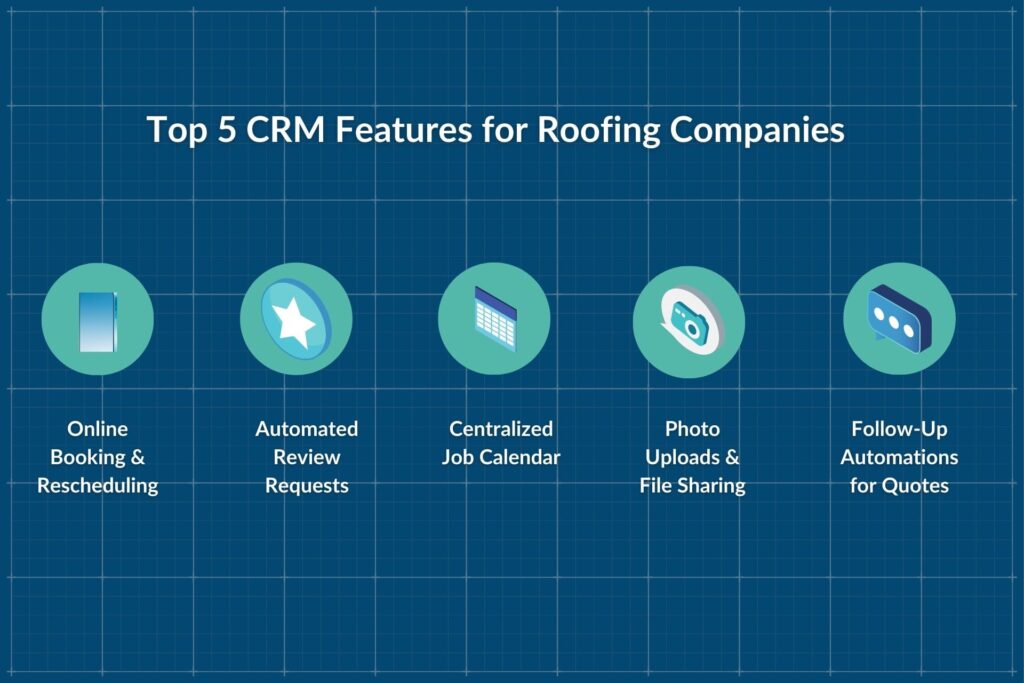
Most roofing contractors think of a CRM as a tool for tracking jobs or customer info. But when used right, it becomes the central hub of your entire marketing system.
Here’s what the Negosense CRM helps you do:
- Capture every lead automatically from your website, forms, phone calls, and ads
- Send instant follow-ups via email or text (no more lost leads or slow responses)
- Track where leads are coming from (Google, Facebook, word of mouth, etc.)
- Stay on top of estimates, appointments, and job status in one clean dashboard
- Automate review requests after jobs are complete
- Retarget cold leads with pre-built nurture sequences
It turns your chaotic lead flow into a streamlined, repeatable system.
Why It Matters for Marketing
Most roofers don’t have a lead problem — they have a follow-up and organization problem.
The average contractor responds hours (or even days) after a lead comes in. By then? That customer has already called someone else.
With a system like Negosense:
- Every lead gets a response within seconds
- No lead slips through the cracks
- You can see, at a glance, which campaigns are working and which aren’t
- You can scale confidently — knowing your marketing engine is built for growth
Marketing brings people to your business. Your CRM helps you convert them into customers.
Want to see how the Negosense CRM for home services can fit into your roofing business?
Book a free call and we’ll show you how to connect your website, ads, reviews, and lead tracking — all in one place.
Turn Your Roofing Marketing Into a Growth Engine
Most roofers don’t need more ideas — they need a clear strategy, consistent execution, and the right tools to make it all work together.
Whether you’re trying to outrank your competitors on Google, get more out of your ads, or finally fix the follow-up gaps in your sales process — roofing marketing in 2025 comes down to this:
- Be visible where customers are already looking
- Build trust before they even call
- Respond faster than your competitors
- And stay top-of-mind even after the quote goes cold
You don’t have to do it all yourself. You just need a system — and a partner who knows how to build one that works.
Ready to Start? Let’s Build Your Marketing Machine.
If you’re serious about growing your roofing business this year, we’re here to help.
Book a free strategy call and we’ll show you exactly what’s working in your market — and how we can help you turn it into booked jobs and real revenue.
Frequently Asked Questions About Roofing Marketing
1. What is roofing marketing, and why is it important?
Roofing marketing refers to the strategies and tactics used to attract and convert new roofing customers — including SEO, PPC ads, social media, email marketing, and more. It’s important because over 97% of homeowners now search online before choosing a contractor. Without a strong marketing system, you risk losing jobs to competitors who aren’t necessarily better — just more visible.
2. How much should a roofing company spend on marketing?
A general rule of thumb is to invest 5–10% of your revenue into marketing, depending on your goals. If you’re looking to grow aggressively, aim for the higher end of that range. Budget should cover your website, SEO, advertising, and possibly a CRM to manage leads and follow-ups.
3. What’s the best digital marketing strategy for roofing companies in 2025?
The most effective strategy is a mix of:
- Local SEO to appear in Google Maps
- Google Ads for immediate leads
- Social media to build trust and stay visible
- Email/SMS follow-ups to close more deals
- A CRM to tie everything together
You don’t need to do everything at once — start where your customers are already looking, then build from there.
4. Should I hire a roofing marketing agency or do it myself?
If you have time and technical skills, DIY can work — especially in the beginning. But if marketing keeps getting pushed aside or you’re unsure what’s working, hiring an agency can help you grow faster and more consistently. Look for an agency with contractor-specific experience and transparent pricing.
5. What kind of leads should I focus on — inbound or outbound?
Inbound leads (from SEO, ads, content, etc.) are typically more qualified and ready to buy. Outbound (like door knocking or cold calling) can still work but often requires more effort. The best roofing companies use a combination of both — with systems in place to capture and follow up with every lead.
6. How long does roofing SEO take to work?
Most roofing contractors start seeing results from SEO in 3–6 months, depending on the competition in your area and the quality of your website and content. It’s a long-term strategy, but it can deliver a consistent stream of free, high-quality leads once it gains momentum.
7. What’s the role of a CRM in roofing marketing?
A CRM (Customer Relationship Management system) helps you capture, track, and follow up with leads automatically. It connects your website, ads, reviews, and quotes — making sure no lead slips through the cracks and your follow-ups are instant. Tools like the Negosense CRM are built specifically for contractors who want more control and fewer lost opportunities.
Related Articles
Roofing Services
- Roofing Google Ads: Generate More Leads with PPC for Roofers
- Proven Strategies for Generating Commercial Roofing Leads
- The Ultimate Guide to Roofing SEO: How to Rank Higher and Get More Leads
- The Ultimate Guide to Roofing Lead Generation
- Roofing Marketing Strategies that Actually Work in 2025
- The Ultimate Guide to Roofing Website Design