Marketing Strategy
HVAC Marketing Plan: Build a Real Strategy to Grow in 2025
If you’re serious about growing your HVAC business in 2025, you can’t afford to wing it.
Too many contractors jump into Google Ads or social media without a clear plan—only to waste time, blow their budget, and wonder why the phone isn’t ringing.
A solid HVAC marketing plan changes that. It gives you a clear direction, helps you focus on what actually works, and ensures you’re not just reacting to slow seasons—but proactively building a system that brings in leads consistently.
In this guide, we’ll walk you through how to build a complete HVAC marketing plan step by step. You’ll learn how to:
- Set growth goals that make sense for your business
- Prioritize the right marketing channels based on your budget and bandwidth
- Build a lead gen system that brings in business year-round
- Track and optimize your efforts to improve results over time
Whether you’re a one-person shop or managing multiple crews, this guide will help you build a real plan to grow your HVAC business—without guessing.
Why Every HVAC Company Needs a Structured Marketing Plan
The HVAC industry is seasonal, with demand often peaking during extreme weather conditions. For this reason, many HVAC businesses experience highs and lows in revenue throughout the year. A marketing plan provides:
- Consistency: By proactively defining your marketing efforts, you ensure a steady flow of leads and clients throughout the year, rather than reacting to slow seasons.
- Brand Recognition: A well-structured plan helps customers recognize your HVAC company and trust your services, which leads to greater customer loyalty.
- Resource Allocation: Know where and how to invest your marketing dollars to yield the highest return on investment (ROI).
In the sections below, we’ll outline the key components of an HVAC marketing plan to help you get more leads, close more jobs, and keep customers coming back.
Step 0: Set Clear Marketing Goals
Before you touch a single ad, website, or social post, get clear on what success looks like. Without specific goals, it’s impossible to know if your marketing is actually working—or just draining your budget.
Define Goals Based on Business Stage
| Stage | Example Goals |
|---|---|
| New Business | Get 15–30 leads/month, hit $10K–$20K/month revenue, reach 20 Google reviews |
| Established Business | Scale to $50K–$80K/month revenue, improve ROI on ads, reduce lead cost |
| Growth Mode | Expand to new service areas, hire additional crews, launch multi-channel marketing |
Set SMART Goals
Good goals are:
- Specific: “Get 30 qualified leads per month”
- Measurable: “Lower cost-per-lead from $80 to $50”
- Achievable: Based on your budget and team size
- Relevant: Aligned with your growth stage
- Time-bound: “Within 90 days”
Sample HVAC Marketing Goals
Here are a few goals HVAC companies often set:
- Generate 30–50 high-quality inbound leads/month
- Reach 100 Google reviews with a 4.8+ rating
- Increase monthly revenue by 25% in Q3
- Expand into one new ZIP code or city
- Decrease lead cost from $90 to under $60
- Achieve 4x ROI on paid advertising campaigns
Use these as a starting point—but tailor them to your real-world constraints and ambitions.
Step 1: Define Your Target Audience
Before you decide how to market, get clear on who you’re marketing to. HVAC businesses typically serve two core segments—residential and commercial—but each has distinct needs and decision drivers.
Residential Customers
- Pain Points: AC not working, high energy bills, urgent repairs during summer/winter
- Priorities: Fast response, trust, price transparency
- Best Channels: Google Search, Google Business Profile, local SEO, reviews, Facebook Ads
Commercial Customers
- Pain Points: System reliability, maintenance contracts, compliance
- Priorities: Professionalism, uptime, documentation, scalability
- Best Channels: SEO, Google Ads, LinkedIn, direct outreach
Seasonal Demand Considerations
- Promote heating services in fall/winter
- Promote cooling services in spring/summer
- Schedule maintenance offers at season changes
Pro Tip: Niche Down to Stand Out
If your area is competitive, consider focusing your positioning on a specific customer type or service category—like “high-efficiency systems for property managers” or “24/7 HVAC repair for busy homeowners.”
The more specific your messaging, the easier it is to cut through the noise.
Step 2: Build Your HVAC Brand
Branding is about more than just a logo—it’s the identity your customers associate with your business.
- Create a Memorable Logo and Brand Messaging
- Use simple, recognizable elements that reflect reliability, trust, and warmth.
- Craft a slogan that communicates your expertise and values. For example, “Comfort You Can Count On.”
- Ensure Consistency Across All Channels
- Maintain the same colors, fonts, and messaging on your website, social media profiles, business cards, trucks, and marketing materials.
- A unified brand presence ensures customers instantly recognize your business, whether they see it online or offline.
When customers see consistent brand elements repeatedly, they’ll remember your HVAC company first when it’s time for service.
Step 3: Choose the Right Marketing Channels
Not every HVAC company has the same time, budget, or resources. That’s why your marketing plan should reflect your current situation—so you can start strong without spreading yourself too thin.
Start With a Prioritization Matrix
Use this simple matrix to decide which channels to focus on first:
| Your Situation | What to Focus On |
|---|---|
| Low budget, low time | Google Business Profile, customer reviews, referral incentives |
| Low budget, high time | SEO, blogging, email follow-ups, social media |
| High budget, low time | Google Ads, Facebook Ads, CRM automations |
| High budget, high time | Full-funnel strategy (SEO, PPC, retargeting, video, automation) |
The goal isn’t to do everything—it’s to do the right things at the right time.
Layer in Channels Over Time
You don’t need to go all-in on every platform from day one. Build your foundation first, then expand.
Suggested Rollout Example:
- Month 1: Website + GBP optimization + reviews
- Month 2: Launch Google Ads or Facebook Ads
- Month 3: Add email/SMS automation + start blogging
- Month 4: Expand to SEO, retargeting, and social content
This phased approach keeps you focused and avoids burnout.
Step 4: Allocate Your HVAC Marketing Budget
Once your goals and channel priorities are clear, it’s time to assign a realistic budget to each area of your marketing plan.
You don’t need to spend like a national franchise to see results—but you do need to invest smartly and consistently.
How Much Should You Spend?
A general rule of thumb:
- New businesses: 8–12% of projected revenue
- Established businesses: 4–8% of current revenue
- Aggressive growth mode: 10–15%+ if expanding fast
So if your HVAC company brings in $25K/month, expect to spend around $1,000–$2,500/month depending on goals and market competition.
Sample Monthly Budget Breakdown
Here’s a sample breakdown for an HVAC company spending $2,500/month on marketing:
| Channel | % of Budget | Amount |
|---|---|---|
| Google Ads / PPC | 40% | $1,000 |
| SEO & Content Marketing | 30% | $750 |
| Website + Branding Assets | 20% | $500 |
| Reviews, Referrals & Tools | 10% | $250 |
If you’re just starting out, shift more toward PPC to generate fast leads. If you’ve got traffic but no conversions, double down on branding and reviews.
Fixed vs Flexible Costs
- Fixed = Website hosting, CRM platform, brand design
- Flexible = Ad spend, freelancer/agency support, campaigns
Build your plan so that at least 70% of your budget goes toward actions that directly generate leads or improve conversion rates.
Step 5: Set Up Your Website & Online Presence
A professional, user-friendly website is the foundation of any modern HVAC marketing plan. Potential customers often research service providers online before booking.
- Must-Have Pages for HVAC Websites
- Home Page: Display your unique value proposition (e.g., 24/7 emergency service) and invite visitors to request service or a quote.
- Services Page: Outline your HVAC services (installation, repair, maintenance, etc.) with clear descriptions.
- About Us: Highlight your experience, qualifications, and customer-focused approach.
- Contact Page: Make it easy for visitors to reach you by including phone number, email address, and a submission form.
- Testimonials/Reviews: Feature positive feedback to build trust.
- SEO and Local Search Optimization
- Keyword Research: Focus on relevant terms like “HVAC repair [Your City],” “AC installation,” and “heating services.”
- On-Page SEO: Incorporate keywords in meta titles, headers, and page content.
- Google Business Profile: Claim and optimize your listing with up-to-date contact information and photos of your projects.
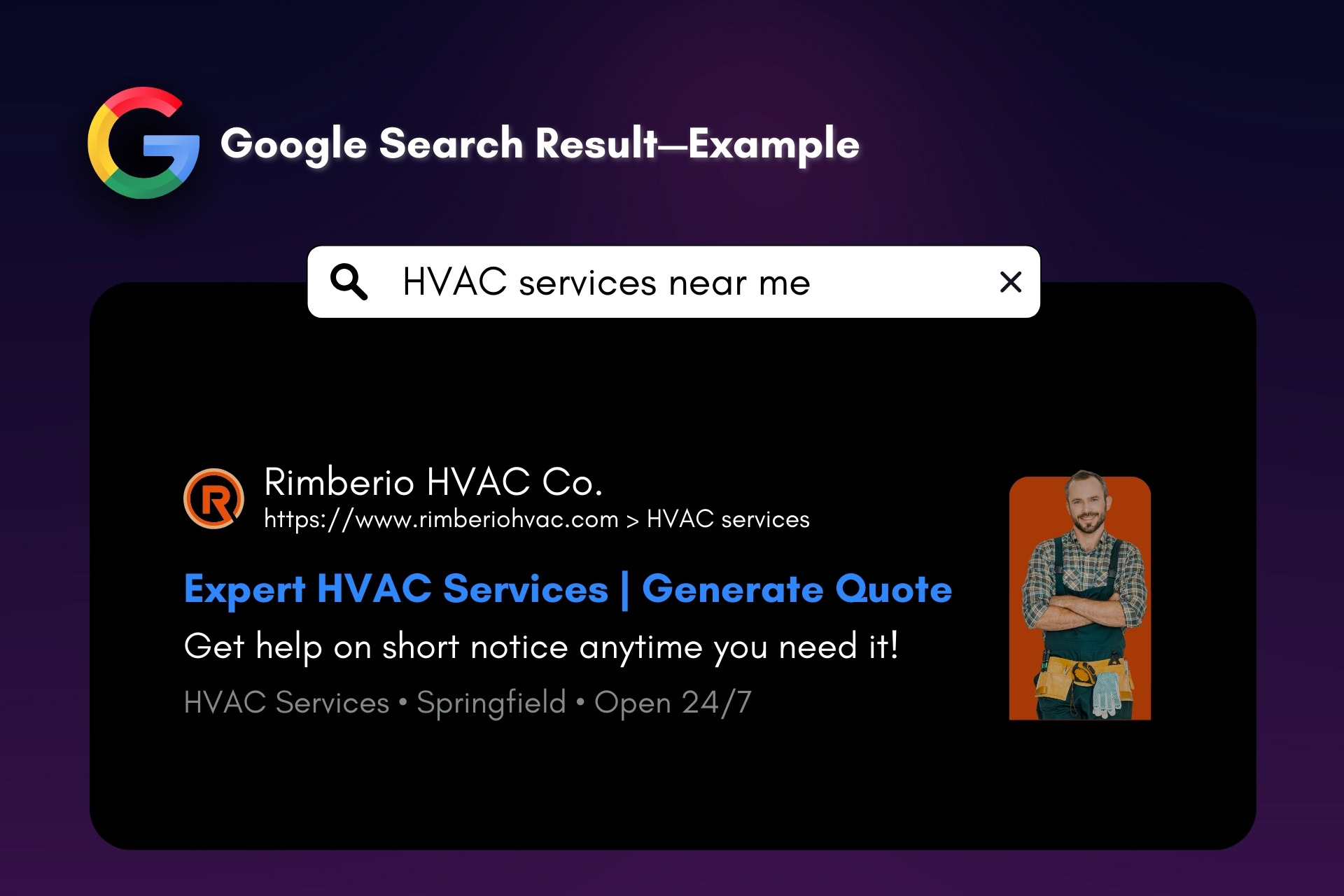
The Negosense CRM for contractors comes with free website setup.
Step 6: Create a Lead Generation Strategy
Generating leads is critical to sustaining your business. There are two main avenues to do this online:
- Pay-Per-Click (PPC) Advertising
- Platforms such as Google Ads and Microsoft Advertising allow you to bid on keywords and get top placements in search results.
- Control your budget by setting daily spending limits, and target specific locations so you only pay for qualified leads.
- Organic Traffic
- Build a content strategy around HVAC topics, from “how to choose the right AC unit” to “furnace troubleshooting tips.”
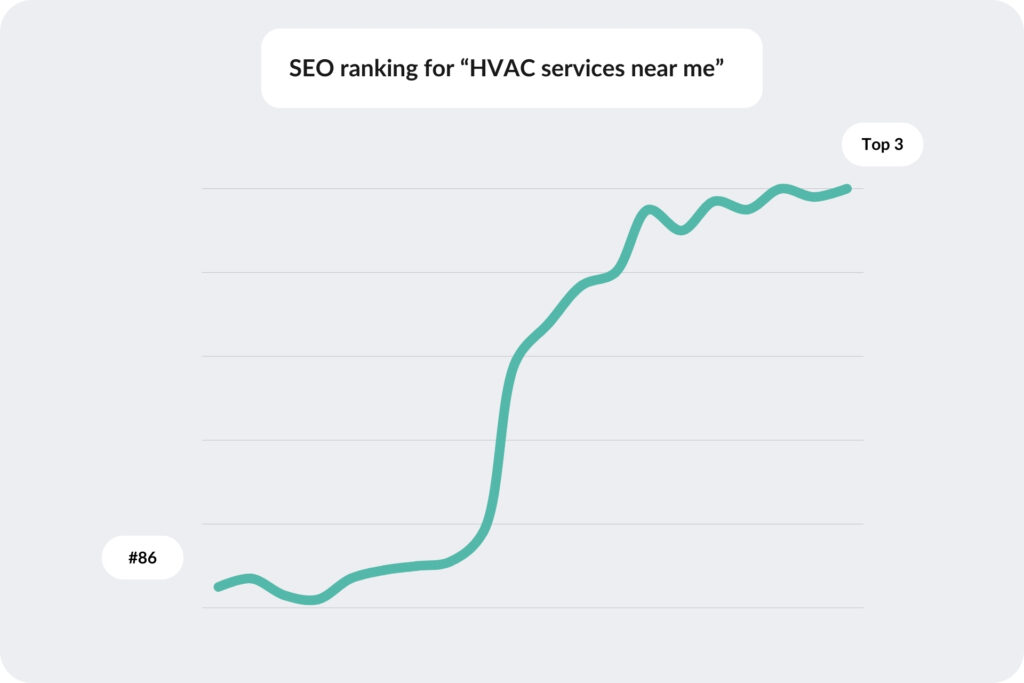
- Regularly publishing blog posts, guides, and case studies helps improve your search engine rankings and positions you as an industry expert.
Wanna learn more about running ads? Check out our guide on Lead Generation for Contractors.
Interested in organic lead generation methods? Check out our Ultimate Guide to Digital Marketing for Home Services.
HVAC Lead Magnets
- Offer seasonal discounts or free consultations for major HVAC installations.
- Promote free energy audits or check-ups to attract potential customers who are on the fence about system repairs or replacements.
Step 7: Leverage Customer Reviews & Reputation Management
In the service industry, social proof can make or break your marketing efforts. Most homeowners and property managers check reviews before hiring an HVAC contractor.
- Encourage Satisfied Customers to Leave Reviews
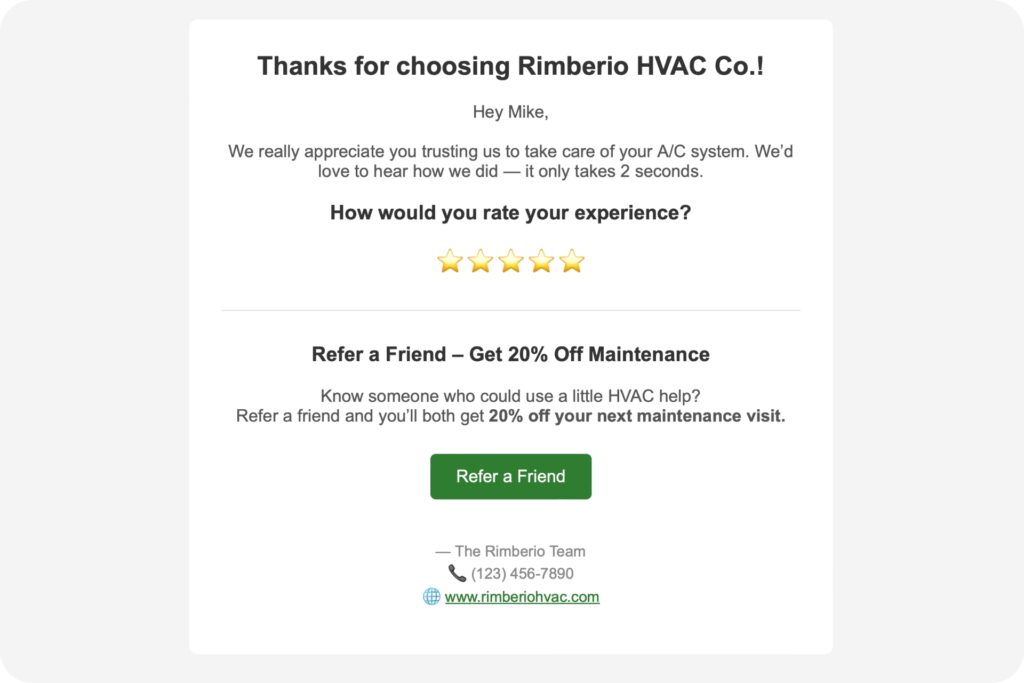
- Send a follow-up email or text message after each job with a direct link to your Google Business Profile or other review platforms.
- Offer a small incentive (like a future discount) to nudge them to share their experience.
- Respond to Negative Reviews Effectively
- Always remain professional, acknowledge the complaint, and offer to address the issue.
- Potential customers often read negative reviews to see how businesses handle mistakes. A thoughtful, solution-focused response can win back trust.
Step 8: Implement Email & SMS Marketing
Staying in touch with customers not only drives repeat business but also generates referrals and positive word-of-mouth.
- Automated Maintenance Reminders
- Use a CRM or marketing software to remind customers when it’s time for their next HVAC tune-up or filter replacement.
- Automated messages ensure you never miss an opportunity to reconnect and provide value.
- Customer Follow-Ups and Referral Incentives
- After completing a job, follow up to confirm their satisfaction and ask if they know anyone who needs HVAC services.
- Offer referral rewards, like a discount on future service, to motivate customers to spread the word.
Need help with digital marketing? Negosense is a full-service digital marketing agency for home services and commercial contractors.
Step 9: Track & Optimize Your Marketing Efforts
A successful HVAC marketing plan isn’t static—it evolves with data and feedback.
- Google Analytics & Call Tracking
- Use Google Analytics to understand where web traffic is coming from, which pages perform best, and how many visitors convert into leads.
- Call tracking software helps pinpoint which marketing channels drive the highest number of inquiries.
- CRM Reporting
- A robust CRM platform can store lead information, track customer interactions, and generate reports to show you which campaigns produce the most revenue.
- Continuously refine your strategies based on real data to boost ROI and reduce wasteful spending.
- Adjust Campaigns Based on Performance
- If PPC ads bring in a high volume of unqualified leads, revise your keywords or targeting.
- If your social media efforts underperform, experiment with different content or platforms.
Wanna learn more about how a CRM can help you convert more leads? Check out our Ultimate Guide to CRM for Home Services.
Build Your HVAC Marketing Plan, Then Execute It
A powerful HVAC marketing plan doesn’t live in your head—it lives on paper, in your calendar, and inside your CRM.
When you set clear goals, focus on the right channels, and follow a 90-day rollout strategy, you give your business the structure it needs to grow—without depending on guesswork or last-minute promos.
Most importantly: don’t let the plan collect dust. Review it monthly, make data-driven adjustments, and keep moving forward.
Want expert eyes on your marketing strategy?
Book a free strategy call and we’ll audit your current approach, identify quick wins, and show you exactly where to focus for better results.
Free Resources to Build Your HVAC Marketing Plan
Need help putting your plan into action? These free tools and guides can give you a head start:
- EasyPeasy AI Marketing Plan Generator – Build a custom marketing plan with step-by-step guidance.
- Canva Marketing Strategy Templates – Create a visual plan that’s easy to understand and share with your team.
Articles Related to HVAC Marketing Plan
- The Ultimate Guide to HVAC Advertising in 2025
- HVAC Leads: The Ultimate Guide to Getting High-Quality Jobs Fast
- HVAC Marketing 101: Key Strategies to Grow Your HVAC Business
- The Best Free HVAC Scheduling Software to Grow Your Business in 2025
- How to Build an HVAC Website That Converts
- How to Grow Your HVAC Business in 2025
- The Ultimate Guide to SEO for HVAC Companies