Paid Ads & Lead Generation
How to Generate Commercial Roofing Leads
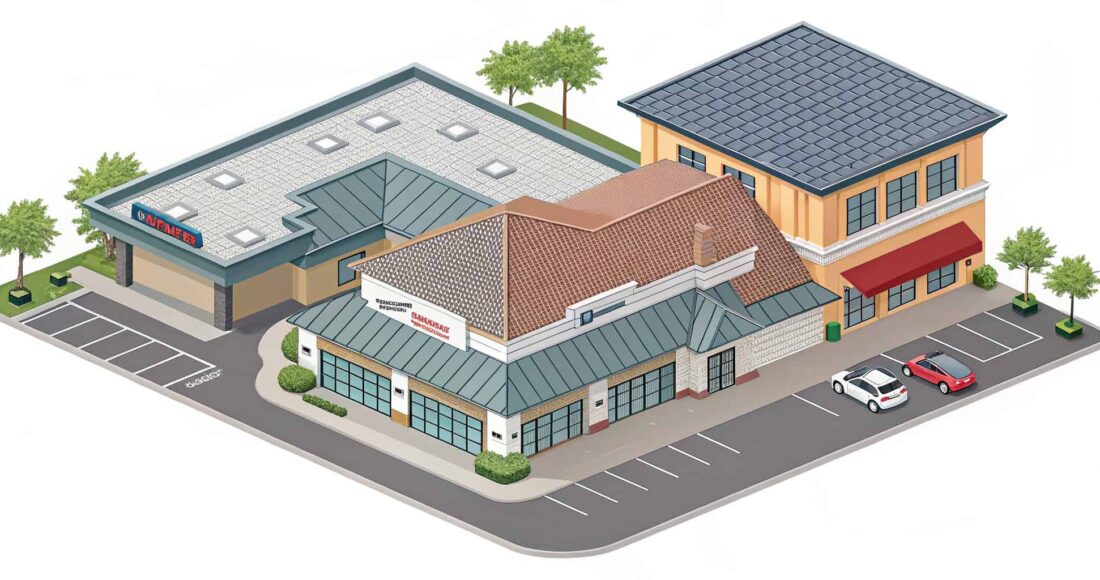
In the commercial roofing industry, leads aren’t just names—they’re the lifeblood of your business.
If you’re tired of chasing low-quality prospects or relying on word-of-mouth alone, this guide is for you. We’re diving into proven strategies to help you generate consistent, high-quality commercial roofing leads that turn into profitable jobs.
Whether you’re wondering how to get commercial roofing leads or trying to figure out how to get commercial roofing jobs without burning through your marketing budget, you’ll find step-by-step tactics that actually work. From dialing in your website and SEO to leveraging smart partnerships and lead magnets, we’ll show you how to take control of your pipeline—and scale faster.
Looking for a deeper dive into specific strategies?
If you’re after detailed breakdowns of SEO, Google Ads, Facebook Ads, or CRM tools built for roofers, check out our other industry-specific guides:
- Ultimate Guide to Digital Marketing for Roofers
- Google Ads for Roofers
- Lead Generation Strategies for Roofers
- CRM for Roofing Companies
- Web Design That Converts for Roofers
Each one is packed with actionable tips to help you build a scalable system—not just short-term wins.
Let’s get into it.
Understanding Your Target Market
Before you can generate consistent commercial roofing leads, you need to know exactly who you’re trying to reach. Unlike residential jobs, commercial roofing projects involve longer sales cycles, larger contracts, and multiple decision-makers. That means your marketing and outreach need to be highly targeted and strategic.
Identifying Decision Makers in Commercial Real Estate
One of the biggest mistakes roofing contractors make is targeting the wrong people. In commercial projects, the decision-makers are often property managers, facilities directors, real estate developers, or business owners—not just building occupants.
To zero in on the right contacts:
- Look for commercial property management companies in your service area.
- Use LinkedIn to connect with roles like “Facilities Manager” or “Director of Operations.”
- Check commercial real estate listings to identify ownership groups and management firms.
- Attend local chamber of commerce events or B2B networking groups to meet business owners directly.
The goal is to build a list of high-value targets who actually have the authority (and budget) to hire you.
Analyzing the Needs of Commercial Property Owners
Commercial property owners care about more than just the price of a roof replacement. They want:
- Minimal disruption to their tenants or operations.
- Long-lasting, energy-efficient roofing systems.
- A contractor they can trust to manage timelines, safety, and compliance.
Your messaging, website, and sales process should reflect these priorities. That means showcasing case studies, emphasizing your certifications and warranties, and clearly explaining how you reduce downtime and liability during projects.
When you truly understand your target market, everything else—your website, ads, outreach, and pitch—becomes sharper and more effective.
Digital Marketing Strategies for Commercial Roofing Leads
Once you’ve nailed down who you’re targeting, the next step is making sure your business is easy to find—and impossible to ignore. Digital marketing is the most scalable and cost-effective way to attract commercial roofing leads, especially when it’s done with a strategy built for high-ticket B2B sales.
Optimizing Your Website for Lead Generation
Your website isn’t just a digital business card—it’s your 24/7 sales rep. For commercial clients, professionalism and trust matter from the first click.
Here’s what your site needs to convert visitors into qualified leads:
- A clean, modern design that looks great on desktop and mobile.
- Clear service pages that explain what you do, who you serve, and why you’re the right choice.
- Prominent calls-to-action like “Request a Quote” or “Book a Site Visit.”
- Case studies or project photos that demonstrate past commercial success.
- A lead capture form that’s simple, fast, and mobile-friendly.

Want help building a high-converting site? Our Web Design for Roofers guide breaks it down step by step.
Leveraging SEO to Rank for Commercial Roofing Keywords
Organic search traffic is one of the most reliable ways to bring in long-term, low-cost leads—if your site ranks for the right keywords.
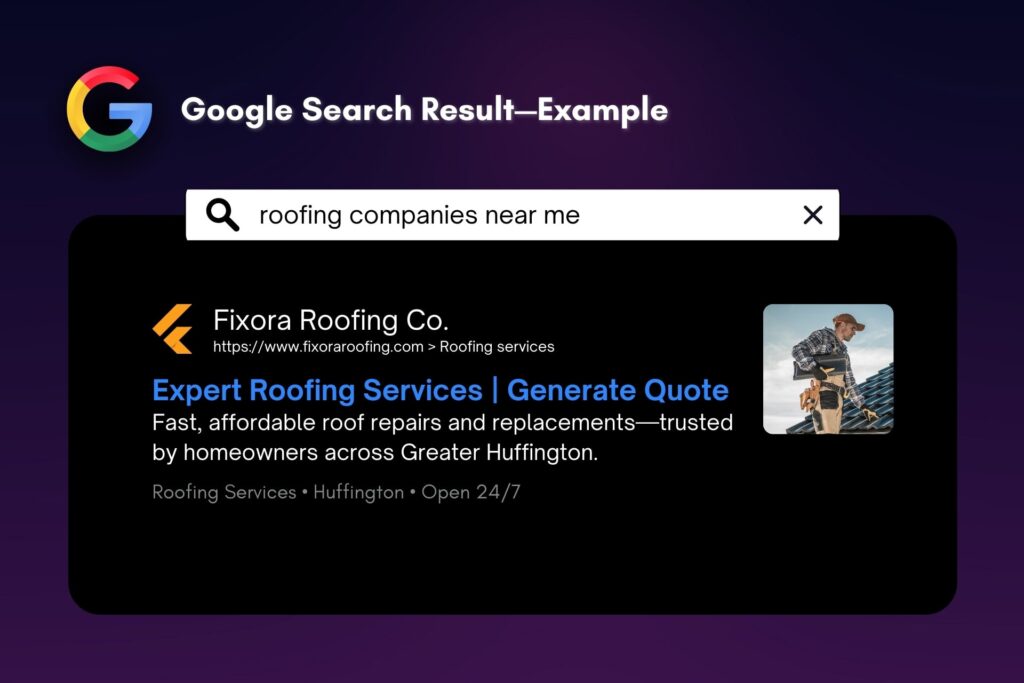
Focus on commercial-intent search terms like:
- “commercial roofing contractors near me”
- “TPO roofing installation [city]”
- “industrial roof replacement quote”
Your content should answer specific questions your ideal clients are searching for, and every service page should be optimized with location-based keywords. Over time, this builds authority and drives targeted traffic from decision-makers actively looking for your services.
Ready to level up your SEO? Check out our Ultimate Guide to Digital Marketing for Roofers.
Pay-Per-Click (PPC) Advertising Tips for Roofers
SEO is powerful, but it takes time. If you need leads fast, paid ads—especially on Google—can put your business at the top of search results instantly.
For commercial roofing:
- Focus your budget on high-intent keywords like “commercial roofing estimate” or “flat roof replacement contractor.”
- Use ad copy that highlights your experience, certifications, and past commercial projects.
- Send traffic to a dedicated landing page—not your homepage—with a clear offer and CTA.
Don’t forget to set up call tracking and form submission tracking to measure ROI and fine-tune your campaigns.
For a full walkthrough of how to do this, see our Google Ads for Roofers guide. If you want this handled, we offer PPC management services for roofing contractors.
Networking and Building Relationships
Digital marketing works, but relationships still close deals—especially in commercial roofing. Big contracts often go to companies with strong reputations and established connections. If you want a reliable stream of commercial roofing leads, it pays to be visible and trusted within the right circles.
Joining Industry Associations and Networking Groups
Being part of professional organizations isn’t just about logos on your website—it’s about access. Membership in groups like:
- National Roofing Contractors Association (NRCA)
- Building Owners and Managers Association (BOMA)
- Local chambers of commerce or real estate groups
…puts you in direct contact with property managers, facility directors, and other decision-makers in your area.
Attend their events. Show up consistently. Offer insights, not just business cards. You’ll build a network that sends opportunities your way when commercial roofing jobs come up.
Attending Trade Shows and Conferences
Trade shows and expos offer a rare chance to meet dozens—or even hundreds—of potential clients, partners, and vendors in one place.
Look for industry-specific events in commercial construction, facilities management, or commercial real estate. These aren’t just places to hand out flyers—they’re opportunities to:
- Showcase your past commercial work.
- Learn about new materials, regulations, and trends.
- Position yourself as a forward-thinking contractor.
Bring a portfolio, talk shop, and follow up quickly after the event. A single quality connection could lead to a six-figure contract.
Pro Tip: Use a CRM to track every contact and follow-up opportunity from networking events. (Not using one? Our CRM Guide for Roofers can help you choose the right setup.)
Utilizing Social Media and Online Platforms
Social media isn’t just for brand awareness—it can be a powerful tool for generating commercial roofing leads when used strategically. The key is to focus on platforms where decision-makers spend time and to create content that builds credibility, not just visibility.
Best Practices for LinkedIn Marketing
LinkedIn is hands down the most effective platform for connecting with commercial property professionals. But cold messages and generic content won’t cut it. To stand out:
- Optimize your company profile with clear service offerings, client types, and commercial project highlights.
- Post consistently—share completed projects, industry insights, and client testimonials.
- Use LinkedIn Search to find and connect with facility managers, property developers, and business owners.
- When you reach out, don’t pitch right away. Start a conversation based on value—comment on something they posted, or share a relevant tip or resource.
Over time, this positions you as a go-to commercial roofing expert, not just another contractor in the inbox.
Engaging with Potential Clients on Facebook and Instagram
While Facebook and Instagram are more visual and casual, they can still help you stay top-of-mind with local business owners and property managers.
Here’s how to make them work:
- Share photo galleries or before/after reels of your commercial projects.
- Highlight safety processes, certifications, or crew training to build trust.
- Use Facebook Groups—local business forums or B2B networks—to answer questions and engage (without spamming).
- Run retargeting ads to stay in front of website visitors who didn’t convert the first time.
Consistency matters more than going viral. You’re not chasing likes—you’re staying visible to the right people when they’re ready to hire.
Content Marketing and Lead Magnets
While ads and outreach get you visibility, content marketing builds trust—and trust is what closes commercial roofing jobs. Decision-makers need proof that you understand their challenges and can deliver results. Content gives you a way to demonstrate that expertise before you even talk to them.
Creating High-Value Blog Content That Attracts Leads
Your blog shouldn’t just talk about roofing—it should answer the questions commercial clients are asking before they ever pick up the phone.
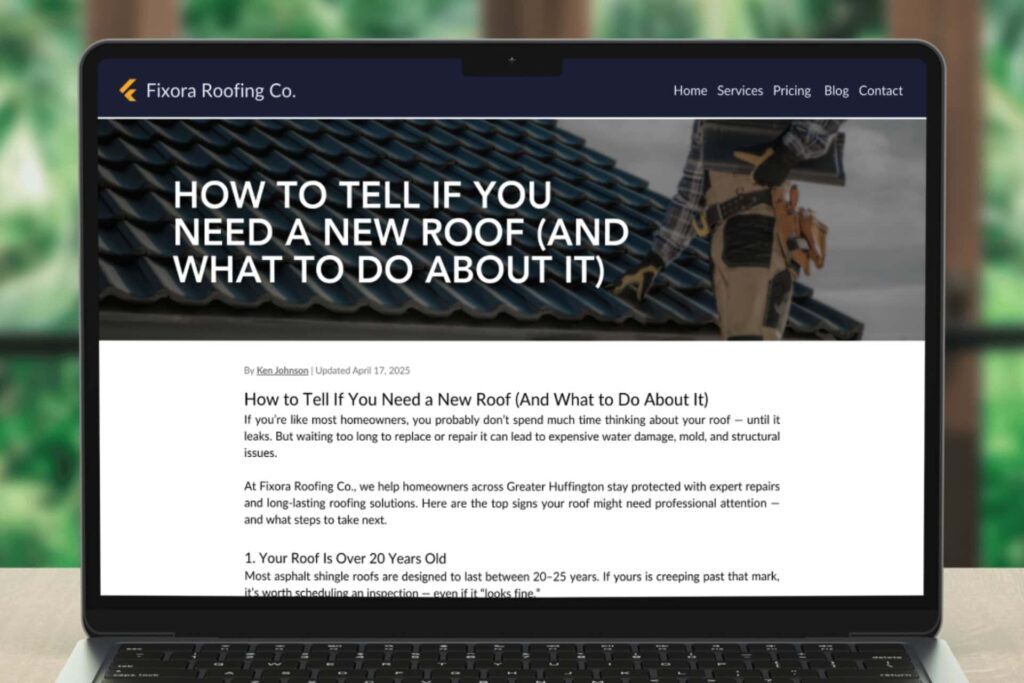
Some ideas to attract high-intent traffic:
- “How to choose a commercial roofing contractor for a multi-tenant building”
- “TPO vs. EPDM: What property managers need to know”
- “Roof maintenance checklist for commercial buildings”
These posts do double duty: they improve your SEO and give you content to share on social media, email, or LinkedIn. Add a CTA at the end (like “Book a free roof assessment”) to turn readers into warm leads.
Developing E-books, Whitepapers, and Case Studies
Not everyone who visits your site is ready to hire—but that doesn’t mean they’re a lost lead.
Offering downloadable content in exchange for contact info (also known as a lead magnet) is a great way to capture interest from people still in the research phase.
Some examples:
- A downloadable Commercial Roofing Buyer’s Guide
- A case study showing how you reduced downtime or saved a client money
- A checklist for preparing a building for roof replacement
Once they download, you can follow up with a nurturing sequence—educating them and staying top-of-mind until they’re ready to talk.
Bonus: If you’re already using a CRM, you can automate this follow-up process. If not, check out our Guide to CRM for Roofers to get started.
Referral Programs and Partnerships
Sometimes your best leads don’t come from ads or SEO—they come from people who already know, like, and trust your work. Commercial roofing leads sourced through referrals or strategic partnerships tend to convert faster and have higher lifetime value. But to get them consistently, you need a system—not just good luck.
Encouraging Referrals from Satisfied Clients
Commercial clients don’t hand out recommendations lightly—but when they do, it carries serious weight.
To increase your chances:
- Deliver a smooth, professional experience from first contact to project closeout.
- After a successful job, follow up and ask directly: “Do you know anyone else who manages properties that might need a contractor they can trust?”
- Sweeten the deal with a simple referral incentive—like a service discount, gift card, or charitable donation in their name.
- Make it easy. Provide a templated email they can forward or a referral form they can fill out in under a minute.
Bonus tip: Add a “Refer a Client” section to your website or email signature to passively generate referrals year-round.
Building Partnerships with Related Businesses
Think beyond your industry. There are businesses that already serve your ideal clients—and aren’t competing with you.
Consider partnering with:
- Commercial property managers and real estate brokers
- Commercial HVAC or plumbing companies
- Architects and general contractors
- Facility maintenance firms
Offer to refer your clients to them and ask for the same in return. You could even collaborate on bundled service offerings or co-branded marketing content.
These partnerships are especially powerful because they create warm intros to qualified leads—often before your competitors even know the job exists.
Turn Strategy into Commercial Roofing Leads
Winning commercial roofing jobs isn’t about doing one thing right—it’s about building a system that works from every angle. From dialing in your digital marketing and building authority with content to creating referral pipelines and forming strategic partnerships, success comes from consistency across all fronts.
Here’s the key takeaway:
There’s no silver bullet. But when you stack these strategies together, you create a lead generation machine that keeps your calendar full—without relying on luck or last-minute scrambling.
If you’re serious about growing your commercial roofing business, now’s the time to get strategic. Whether you need a better website, stronger local SEO, or a lead gen system that doesn’t waste your budget—we can help.
Let’s build something that brings in the right clients, on repeat.
Book a free strategy call to see how our team can help you attract more commercial roofing leads and close bigger contracts—faster.
Frequently Asked Questions (FAQs)
How do I get more commercial roofing jobs?
Start by identifying key decision-makers like property managers, developers, or business owners. Then focus on building visibility through SEO, Google Ads, LinkedIn outreach, and industry networking. Creating content that builds authority and trust—such as case studies, blog posts, and project showcases—can also bring consistent, high-quality leads.
Is SEO really worth it for commercial roofing?
Absolutely. While it takes time, SEO brings long-term, low-cost leads from people actively searching for services like yours. Target commercial-intent keywords, optimize your service pages, and regularly publish helpful content tailored to commercial property owners and managers.
What’s the best way to follow up with leads?
Use a CRM system to track every inquiry, set reminders, and automate follow-ups through email and SMS. Timely, professional communication is key—especially in commercial roofing, where deals are larger and more complex. If you’re not using a CRM yet, check out our [CRM Guide for Roofers].
Are PPC ads worth the cost for commercial roofing?
Yes—if done right. PPC ads on Google can instantly put your business in front of high-intent searchers. Just make sure your ads are tightly focused on commercial keywords, and that you send traffic to a dedicated landing page with a strong offer and call-to-action.
How do I know if my website is converting visitors into leads?
Check your bounce rates, time-on-site, and conversion rates (form submissions, quote requests, etc.). If visitors aren’t taking action, your site may need a clearer message, faster load times, mobile optimization, or more compelling proof (like case studies and certifications). Our [Web Design for Roofers] guide can help you fix that.
Related Articles
Roofing Services
- The Ultimate Guide to Roofing Lead Generation
- The Ultimate Guide to Roofing CRM Software
- The Ultimate Guide to Roofing SEO: How to Rank Higher and Get More Leads
- Roofing Google Ads: Generate More Leads With PPC for Roofers
- The Ultimate Guide to Roofing Website Design
- Roofing Marketing Strategies That Actually Work in 2025