Paid Ads & Lead Generation
The Ultimate Guide to Roofing Lead Generation

If you run a roofing company, you already know the biggest challenge isn’t doing the work — it’s getting a steady flow of qualified leads.
Maybe you’ve tried buying roofing leads from third-party vendors. Maybe you’ve dabbled in Facebook or Google Ads. Or maybe you’re still relying on word-of-mouth and hoping the next big job comes through a referral.
Either way, the question remains:
What’s the best way to get roofing leads right now — without wasting time or money?
In this ultimate guide, we’ll break down the top-performing lead generation strategies for roofing contractors in 2025. You’ll learn:
- Which lead sources deliver the highest ROI (and which ones to avoid)
- How to get free roofing leads through community-driven tactics
- What types of ads still work in local markets
- How to convert more leads with better sales follow-up
- And where digital channels like Google Ads, SEO, and Facebook Ads fit into your overall strategy
Note: This guide focuses on lead generation fundamentals. For full breakdowns of SEO, Google Ads, and Facebook Ads, check out our other industry-specific guides.
By the end, you’ll walk away with a practical roadmap for generating more roofing leads — whether you’re starting from scratch or looking to scale an established business.
Let’s get started.
What Is Roofing Lead Generation?
Roofing lead generation is the process of attracting potential customers who are actively looking for roofing services — whether that’s a homeowner with a leak, someone needing a full roof replacement, or a property manager preparing for seasonal maintenance.
But not all leads are created equal.
A homeowner who contacts you directly after seeing your ad or reading your reviews is a far better prospect than a cold lead purchased from a third-party site. That’s why your goal shouldn’t be just to get more leads — it should be to get better, higher-intent roofing leads who are ready to buy.
Lead Generation vs. Marketing vs. Branding
These terms are often used interchangeably, but here’s the key distinction:
- Lead generation is about capturing real people — names, phone numbers, and emails — who are interested in your services.
- Marketing builds awareness of your company so people remember you when the time comes.
- Branding creates the long-term reputation that makes people want to choose you over other roofers.
This guide is focused on lead generation — how to drive interest, capture contact info, and turn that into booked jobs.
If you’re specifically targeting B2B clients (like commercial property managers), check out our Commercial Roofing Leads guide.
Paid Roofing Leads – What Works and What to Watch Out For
When you need leads fast, buying them can feel like the easiest option. And in some cases, it works — but not all paid leads are worth your time or money.
In this section, we’ll break down the pros and cons of buying roofing leads, how to choose the right lead service, and how to avoid the common traps that drain your budget.
Buying Roofing Leads: Pros, Cons & Key Vendors
Lead marketplaces like Angi, Thumbtack, Networx, and Modernize promise to deliver homeowners actively looking for roofing services — but what they don’t always advertise is that they often sell the same lead to multiple contractors.
Pros:
- Quick way to fill your pipeline
- No need to build your own marketing system
- Can help during slow seasons or when expanding into a new area
Cons:
- Leads are often shared, meaning you’re competing instantly
- Many leads are price shoppers, not high-intent buyers
- Quality and intent vary widely
- You may be paying for leads that go nowhere
If you decide to test these services, track every lead, note conversion rates, and set a strict budget.
Roofing Lead Generation Companies: How to Choose
Some agencies or vendors offer custom “exclusive” roofing leads or promise high-converting lead funnels. While these can be valuable, they’re not all created equal.
What to look for in a lead gen provider:
- Do they offer exclusive leads (only sent to you)?
- Can they verify how leads are generated (ads, SEO, referrals)?
- Do they provide call recordings or lead forms so you can assess quality?
- Can you pause or scale volume as needed?
Red flags: Long-term contracts, unclear lead sources, no reporting dashboard, or leads that don’t match your service area.
Free Roofing Leads: Low-Cost Tactics That Still Work
You don’t always need a big ad budget or a lead gen service to keep your schedule full. In fact, some of the most qualified roofing leads come from simple, old-school methods — when they’re done with intention.
If you’re just getting started, want to boost profit margins, or need to stabilize lead flow between paid campaigns, these free and low-cost strategies are still effective in 2025.
Tap into Past Customers and Referrals
Your previous customers are your most valuable lead source — not just for repeat work, but for introductions to friends, neighbors, and family members.
Try this today:
- Text or email 10 past customers asking if they know anyone who might need a roof inspection, minor repair, or quote.
- Offer a small incentive like “$100 off your next service” for each successful referral they send your way.
Even one callback could turn into a $10K job — and build momentum for more.
Maximize Every Job Site
Every roof you install is a marketing opportunity. Here’s how to make the most of it:
- Yard signs – Ask for permission to leave a branded sign for a week post-job.
- Before-and-after photos – Post on Google, your website, and social media.
- Truck wrap parked visibly – Free impressions every time you’re on-site.
Consistency here builds recognition — and recognition builds trust.
Leverage Local Visibility
If you’re not showing up in your neighborhood, you’re leaving easy leads on the table.
- Join neighborhood Facebook groups (non-promotional, helpful posts)
- Participate in local events — booths, giveaways, or sponsorships
- Advertise in HOA newsletters, school bulletins, or church directories — especially in areas with aging roofs
These placements are often overlooked, but they work because they reach homeowners right where they live.
Digital Roofing Lead Generation: Quick Wins from Google, SEO & Social
Digital channels are often the fastest way to generate leads — but they also tend to be the most misunderstood. If you’ve ever tried running ads or updating your website without seeing results, you’re not alone.
Here’s a breakdown of the three core digital lead sources — and how to get started the smart way.
Google Ads: Get to the Top Instantly
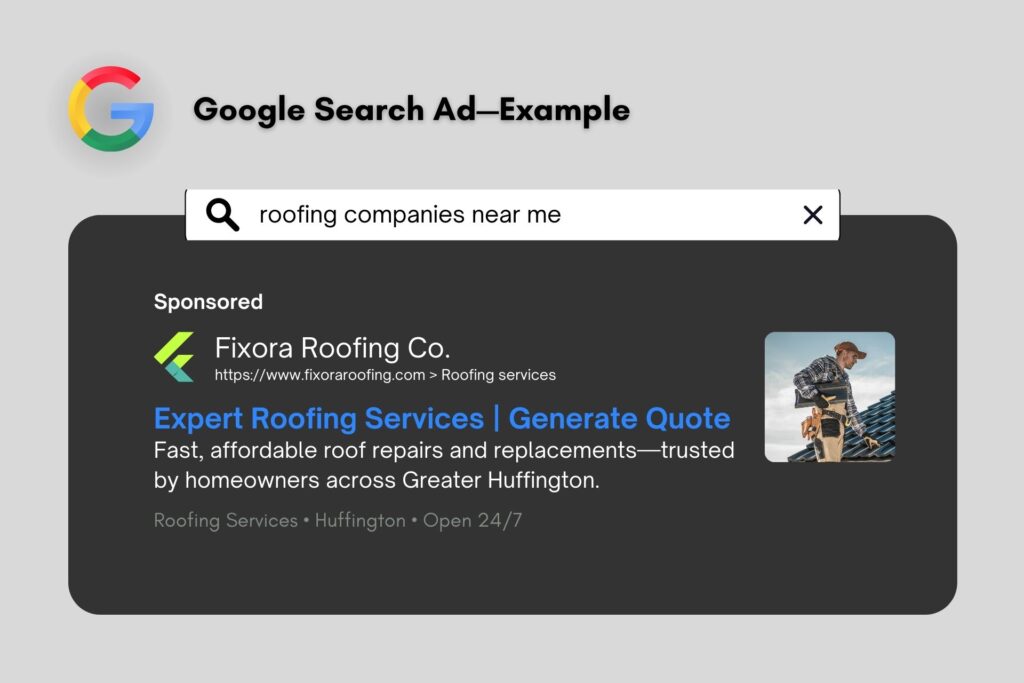
Google Ads allow you to show up at the exact moment someone searches for services like “emergency roof repair” or “roofers near me.” It’s fast, scalable, and highly targeted — but only if your campaigns are set up correctly.
Quick-win tip:
Target “high intent” search terms like:
- roof replacement estimate [city]
- best roofing contractor near me
- storm damage roof repair
These are the people actively looking to hire — not just browsing.
Ready to launch ads that actually convert? Check out our Google Ads guide for roofers.
SEO: Free Roofing Leads That Come to You
Search Engine Optimization (SEO) is about getting your business to rank naturally in Google so leads come to you — no ad budget required. It’s slower to ramp up but powerful in the long run.
Quick-win tip:
Claim and optimize your Google Business Profile with:
- A service area map
- At least 10 five-star reviews
- Real before/after project photos
- Keywords like “roofing company in [city]”
This alone can drive dozens of free calls per month.
Want long-term lead flow without ad spend? Explore our Roofing SEO guide.
Facebook Ads: Target Neighborhoods with Visual Offers

Unlike Google, where people search for roofers, Facebook lets you interrupt the scroll with bold offers and photos. It’s perfect for targeting specific zip codes or areas hit by storms.
Quick-win tip:
Run an ad that says:
“Free Roof Inspection – Limited Spots This Week in [City]”
Pair it with a compelling before/after photo and a testimonial. This combo builds trust and urgency fast.
Want to reach local homeowners on autopilot? Read our Facebook Ads guide for roofers.
Convert Roofing Leads Into Booked Jobs
Generating leads is only half the battle. What you do after someone calls, clicks, or fills out a form is what determines whether that lead becomes a paying customer — or disappears forever.
Many roofing companies lose business not because they don’t have enough leads, but because they don’t have a clear process to handle them.
Here’s how to tighten your lead follow-up and boost your close rate.
Respond Faster Than Your Competitors
When a lead reaches out, they’re likely contacting several contractors — and they’re going to hire the first one who responds professionally.
Action step:
Aim to respond within 5 minutes of any inquiry. Use tools like auto-reply text messages or a call answering service to make sure no lead goes cold.
Want to automate your follow-ups? Check out our Roofing CRM guide to streamline your response process.
Ask the Right Questions on the First Call
Your first conversation sets the tone. Don’t just talk price — qualify the lead and establish authority.
Try asking:
- What problem are you trying to solve with your roof?
- Have you already spoken to other contractors?
- How soon are you looking to get this done?
These questions show professionalism, filter out tire-kickers, and help you tailor your pitch.
Present Clear Next Steps
Once you’ve qualified the lead, give them a simple path forward — don’t leave them wondering what happens next.
Example script:
“Great. The next step is a 30-minute on-site inspection. I’ll take a look, give you a written estimate, and answer any questions. Does tomorrow at 4:30 work for you?”
Clarity builds trust — and trust gets jobs booked.
Follow Up Without Being Pushy
If they don’t say yes right away, that’s normal. Most leads require at least 2–3 follow-ups before they’re ready to move forward.
Pro tip:
Send a quick reminder 24–48 hours later:
“Hi [Name], just checking in. Have you had a chance to review the estimate? Let me know if you have any questions — happy to help.”
A simple nudge like this often reactivates leads that would’ve been lost.
With the right follow-up system in place, even a modest number of leads can translate into consistent booked jobs. Now, let’s pull it all together and show you how to build a system that works long-term — whether you’re just starting out or ready to scale.
The Negosense CRM automates the lead generation to review request process, and stands out among the best CRMs for home services.
Build a Reliable Roofing Lead Engine
Lead generation shouldn’t feel like a guessing game — or a rollercoaster. The goal isn’t to just “get more leads,” it’s to build a repeatable system that consistently delivers new roofing jobs month after month.
That means using a mix of lead sources, tracking performance, and continually fine-tuning what works.
Diversify Your Lead Sources
Relying on only one tactic — whether it’s referrals, paid ads, or word-of-mouth — leaves your business vulnerable. Instead, build a mix that balances short-term wins and long-term growth:
- Paid leads for quick volume (but monitor ROI closely)
- Free methods like referrals, community outreach, and job site branding
- Digital tools like Google Ads, Facebook Ads, and SEO to generate leads on autopilot
- Sales systems (CRM, automations) to convert more of the leads you already have
The most successful roofing companies don’t just “try” these tactics — they build systems around them.
Need help running ads? We manage ad campaigns and PPC for home services.
Track What’s Working — and Cut What’s Not
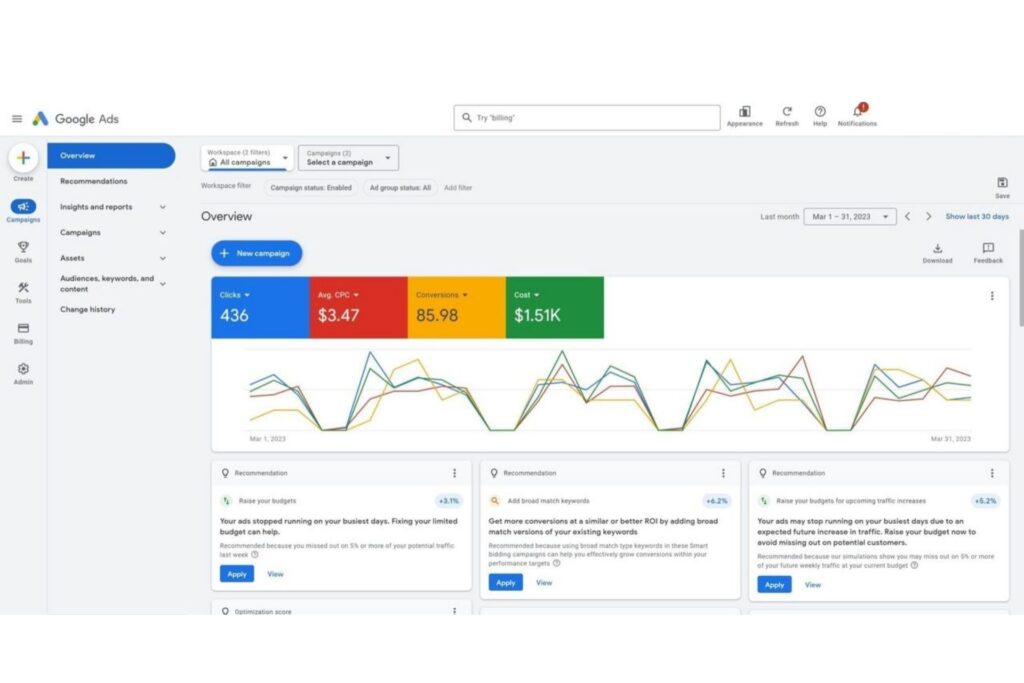
Every time you get a lead, ask yourself:
- Where did it come from?
- How fast did we respond?
- Did it close? If not, why?
You don’t need a fancy CRM to start tracking — a spreadsheet is fine. But over time, having clear visibility into your lead sources and conversion rates helps you double down on what’s working and eliminate what isn’t.
Think Long-Term, Not Just Quick Fixes
Buying a batch of leads might help you get through a slow month. But building your own pipeline — through SEO, local visibility, and repeat business — is what gives you control.
The roofing companies that dominate their market aren’t the ones throwing the most money at ads. They’re the ones who’ve built a lead engine that feeds itself — and keeps their crew busy even when others slow down.
Need a Lead Generation System That Actually Works?
If you’re serious about growing your roofing business, you don’t need more gimmicks — you need a system.
At Negosense, we help roofing companies turn their marketing chaos into a predictable stream of qualified leads. From conversion-optimized websites and automated follow-ups to high-performing ad campaigns and long-term SEO strategies — we build the infrastructure that keeps your pipeline full.
This isn’t about throwing money at ads and hoping for the best. It’s about creating a system that brings in the right leads, filters out the noise, and turns interest into booked jobs.
Ready to stop guessing and start scaling? Book your free strategy call. Let’s build a system that brings in high quality leads week after week – and gives you back control of your growth.
Let’s build something that works.
FAQ
Q: What’s the best way to get roofing leads quickly?
A: Paid channels like Google Ads or exclusive lead services can deliver leads fast — just be sure you track the ROI.
Q: Are free roofing leads still worth pursuing in 2025?
A: Yes — referrals, yard signs, and community presence still convert well, especially when paired with a professional follow-up process.
Articles Related to Roofing Lead Generation
Roofing Services
- Proven Strategies for Generating Commercial Roofing Leads
- Roofing Marketing Strategies That Actually Work in 2025
- The Ultimate Guide to Roofing SEO: How to Rank Higher and Get More Leads
- Roofing Google Ads: Generate More Leads with PPC for Roofers
- The Ultimate Guide to Roofing CRM Software
- The Ultimate Guide to Roofing Website Design