Marketing Strategy
How to Grow a Landscaping Business in 2025 (Real Tips That Work)
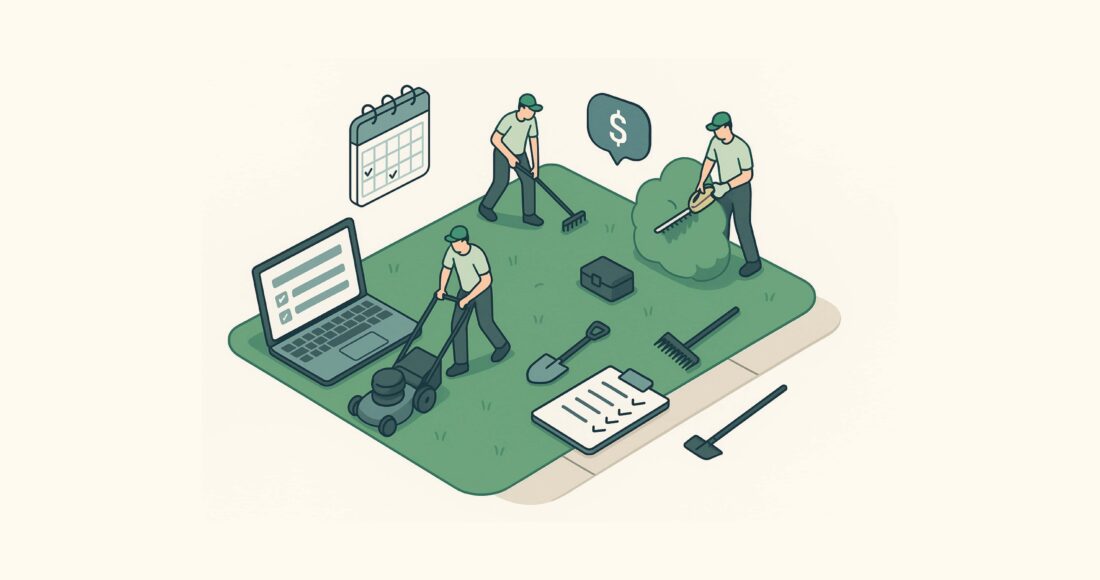
Most landscapers don’t fail because they’re bad at landscaping.
They fail because they try to grow without a plan.
Hiring more people, taking on bigger jobs, or advertising without systems in place can actually hurt your business. The result? Burnout, low margins, and a schedule full of work that barely pays.
If you’re asking how to grow a landscaping business, the answer isn’t more hustle — it’s clarity, structure, and smart marketing.
In this guide, you’ll get real landscaping business tips backed by research, industry insights, and strategies that work in the field — not just on paper. Whether you want more profit, better clients, or freedom from the day-to-day chaos, this post will show you how to grow the right way in 2025.
Landscaping Business Tips That Actually Drive Growth
Let’s get one thing straight: you don’t grow by doing more — you grow by doing the right things consistently.
Here are the foundational tips that separate the landscapers who scale from those who stay stuck at the same income year after year:
Start With Profit, Not Revenue
Most landscaping businesses undercharge, especially when starting out. But working harder on underpriced jobs doesn’t lead to growth — it leads to exhaustion.
According to Housecall Pro, 18% of small businesses fail due to pricing issues and unclear financials.
Here’s what to do instead:
- Calculate your break-even price (including labor, fuel, tools, wear and tear, and overhead)
- Add a margin that reflects profit — not just what feels “fair”
- Review pricing every season, especially with rising material and wage costs
You can’t outwork a broken pricing model. Growth only works when every job is profitable.
Focus on Recurring Revenue and Bundled Services
If you’re constantly chasing new jobs, you’ll burn out. Instead:
- Offer monthly or seasonal maintenance plans
- Bundle services like mowing, fertilizing, and seasonal cleanups
- Incentivize long-term clients with discounts or priority scheduling
Recurring income = predictable cash flow, route density, and easier scaling.
Don’t Do Everything — Define Your Core Services
Trying to be everything to everyone leads to chaos. Get specific:
- What services make the most profit?
- Which jobs drain your time and energy?
- What are you great at — and can train others to do?
Standardize your offer. Train your crew on those services. Sub out or turn down the rest.
“Trying to scale with one-off jobs and unpredictable work is a recipe for burnout.” — Zuper Blog
Build a Strong Foundation Before You Scale
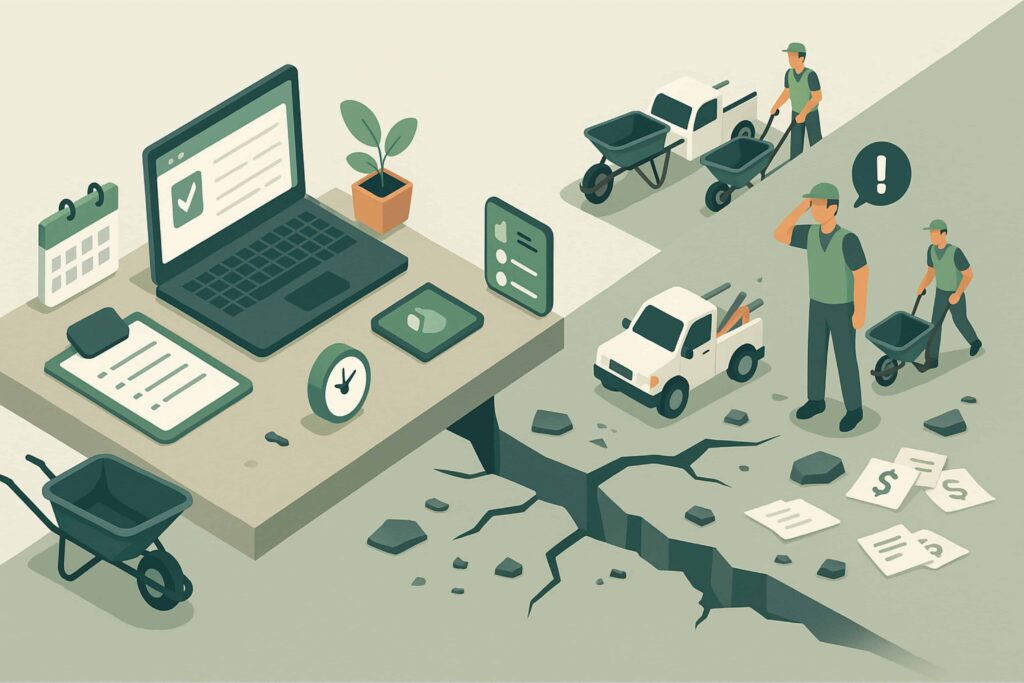
A lot of landscaping businesses hit a wall around $150K to $300K in annual revenue. Why? Because they try to grow without fixing their systems first.
Scaling without structure just magnifies problems:
- If you’re underpricing, you lose money faster
- If you don’t track leads or quotes, you drop more balls
- If you have no systems, you work longer hours to manage chaos
Before you think about hiring more people or spending on ads, make sure your foundation is solid.
Know Your Numbers — Exactly
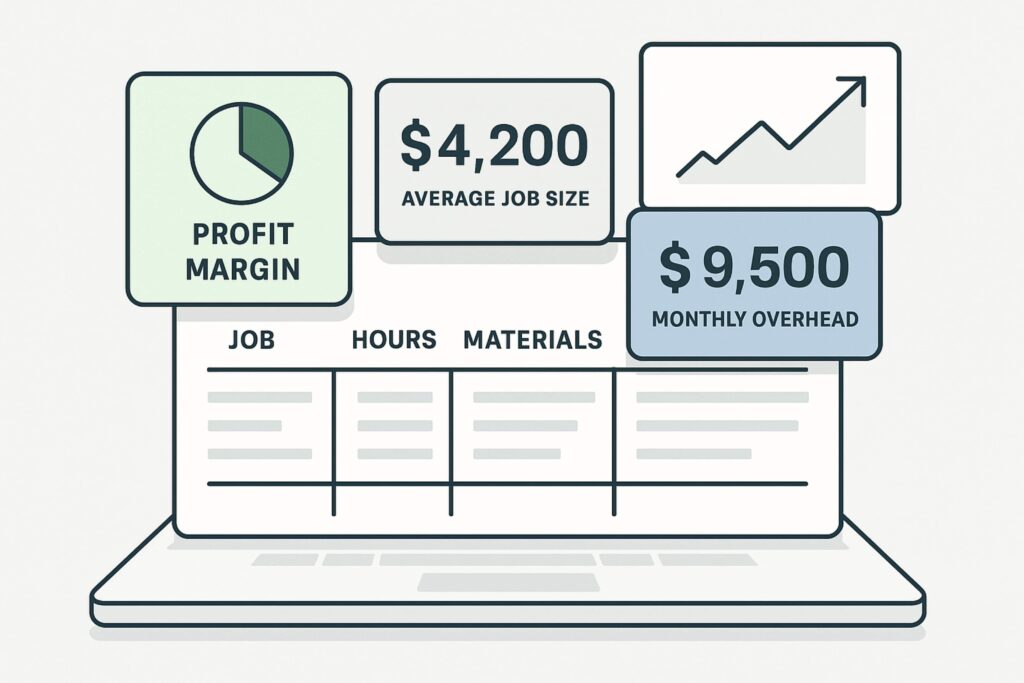
If you don’t know your job costs, close rates, and breakeven point, you’re guessing. And guesswork kills businesses.
Here’s what to lock in:
- Your profit margin per job (after all labor, materials, equipment, etc.)
- Your average job size and how many you need per month to hit your revenue goals
- Your monthly overhead (insurance, software, admin time, fuel, etc.)
“Most owners don’t know if a job was profitable until months later — if at all.”
– Mark Bradley, CEO of LMN
Start simple. Even a spreadsheet with job name, hours, materials, and total cost can reveal which services are worth keeping — and which to cut.
Systematize Your Workflow
What happens when someone requests a quote? Or a customer cancels? Or it rains for three days?
If your answer is “it depends,” you don’t have a system.
Every key part of your business should follow a process:
- Quoting and estimates
- Invoicing and payments
- Follow-ups and review requests
- Rescheduling, routing, and job notes
The tighter your systems, the easier it becomes to train employees, handle growth, and free up your time.
You don’t need to automate everything overnight — but you do need to stop winging it.
Automate the Repetitive Work
You didn’t start a landscaping business to spend your evenings buried in paperwork, chasing leads, or reminding people to leave reviews.
If you’re serious about growth, you need to stop doing everything manually — not later, now.
“Most landscaping owners are stuck in the business because they are the system. That’s not scalable.” – YourAspire.com
Use a CRM to Stay on Top of Every Lead
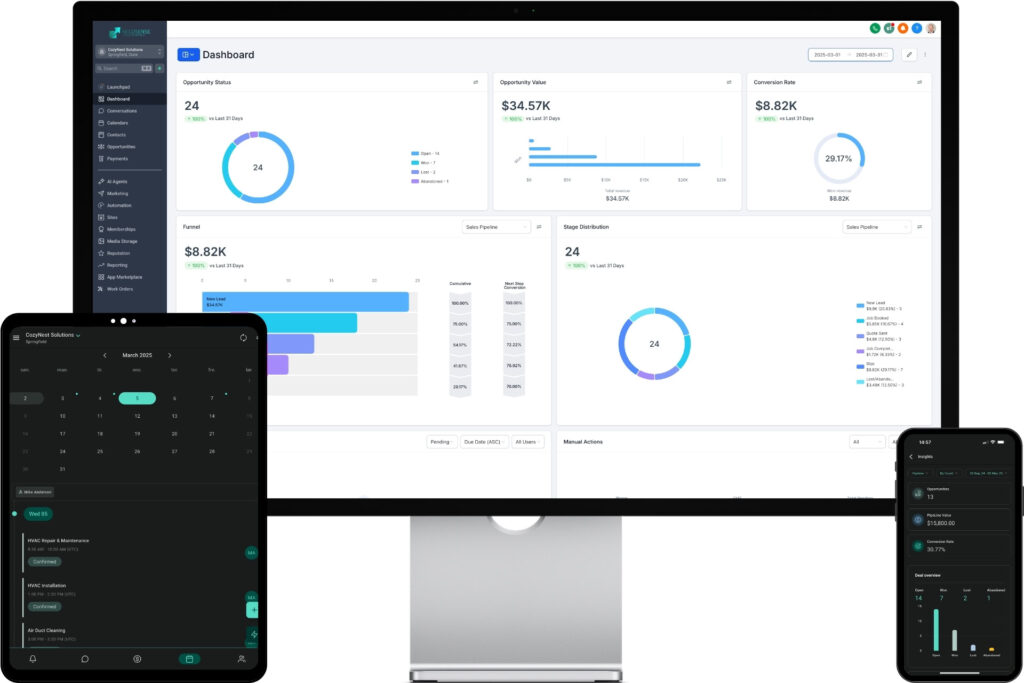
If you’re managing leads with sticky notes, your inbox, or just your memory, you’re leaking revenue.
A CRM (Customer Relationship Management tool) helps you:
- Capture every lead from your website, ads, or referrals
- Track where each quote stands (sent, followed up, booked, ghosted)
- Set reminders so no opportunity slips through the cracks
- Store notes about each client’s preferences, property, and service history
The difference? You follow up faster, close more jobs, and look way more professional.
You don’t need to “sell” harder — you just need to follow up better.
Automate Reminders, Reviews, and Referrals
Some of the highest-leverage things you can do take zero extra time — if you automate them:
- Appointment reminders reduce no-shows and last-minute reschedules
- Review requests help you rank on Google and build trust
- Referral offers turn happy clients into promoters
Set it once, and it runs in the background while you focus on delivering great work.
Keep Your Calendar, Quotes, and Invoices in One Place
When your schedule, quotes, and payments live in different places (like spreadsheets, PDFs, and DMs), mistakes happen. You miss appointments. You double-book. You forget to follow up.
A well-integrated system solves this by syncing:
- Quotes with the job calendar
- Job notes with the crew
- Invoicing with your CRM
- Follow-ups with completed jobs
The end result? You get paid faster, make fewer mistakes, and actually have time to focus on growth instead of putting out fires.
Get More Landscaping Clients Online
If you want to grow, you need more clients — simple. But here’s the catch: most landscapers rely on referrals, Facebook groups, or HomeAdvisor leads that go nowhere.
You don’t need to be everywhere. You just need to be visible when the right people are searching.
Here’s how to do it in 2025:
1. Rank in Local Search (Map Pack or You’re Invisible)
When someone types “landscaper near me” or “yard cleanup [city],” Google shows a map with the top 3 businesses. That’s where you need to be.
To show up there:
- Fully complete your Google Business Profile (especially your services)
- Get 20+ legit reviews with keywords like “landscaping,” “cleanup,” “mulch,” etc.
- Post fresh photos and updates monthly
- Make sure your name, address, and phone number are exactly the same on your website and directories
Need help setting this up? → Local SEO for Landscapers
2. Run Google Ads That Show When People Are Ready to Buy
Most of your best clients will never follow you on Instagram — they’ll just Google something like:
- “landscape design near me”
- “lawn care service [city]”
- “yard maintenance quote”
Google Ads puts you at the top when they’re ready to book.
What works:
- Use keywords tied to services and location
- Send traffic to a simple landing page (not your homepage)
- Include clear offers like “Free Spring Cleanup Quote” or “Monthly Maintenance from $X/month”
Here’s how to set it up without wasting money → Ads for Landscapers
3. Use Facebook Ads to Stay Top of Mind (and Fill Gaps)
Facebook won’t get you hot leads — but it will build brand recognition, fill slow weeks, and bring in off-season work.
Smart ways landscapers use Facebook:
- Promote spring cleanups, mulching, or snow removal
- Use ZIP code targeting to hit your best neighborhoods
- Pair ads with DM automations or simple quote forms
Try this method to get leads without relying on HomeAdvisor → [Facebook Ads Strategy]
4. Turn Visitors Into Customers (Your Website Needs to Work)
If your site takes 5 seconds to load or looks like it’s from 2012, they’re gone. You need a site that builds trust fast.
Essentials:
- Mobile-first design
- Clear service list with photos and pricing tiers
- Online booking or contact forms above the fold
- Social proof — reviews, badges, or before/after photos
Make sure your website converts, not just looks nice → Landscaping Website Guide
Build a Team That Helps You Grow
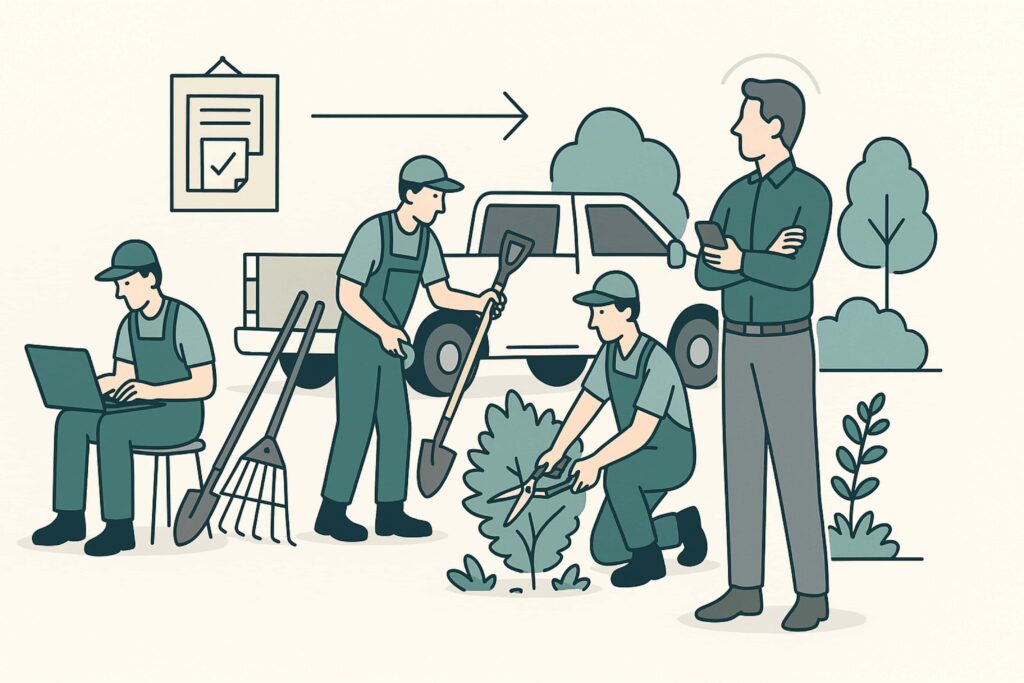
You can’t scale your landscaping business if you’re the one quoting jobs, mowing lawns, ordering mulch, and chasing invoices. At some point, growth means getting out of the field and building a team you can trust.
The mistake most owners make? Hiring warm bodies instead of building a system.
“Landscapers don’t struggle because of bad employees — they struggle because they never built a structure to make good employees successful.”
Here’s how to build a lean, effective crew without becoming a full-time babysitter.
1. Hire for Reliability, Not Just Skill
You can teach someone how to edge a lawn. You can’t teach them to show up on time, be respectful, or take pride in their work.
Look for:
- People with consistent past work, even if it’s not in landscaping
- Anyone who’s done physically demanding jobs — kitchens, moving, roofing
- A good attitude during the interview (on time, eye contact, asks questions)
Document expectations from day one. If someone’s late twice in the first week, cut them loose.
2. Pay Better Than the Guy Down the Street
Cheap labor is expensive. You’ll end up micromanaging, fixing mistakes, and doing the work yourself anyway.
Instead:
- Pay slightly above market — even $2/hour makes a difference
- Offer clear raises tied to performance (not “someday” promises)
- Give bonuses for on-time starts, zero reschedules, or upsells
It’s simple math: a good crew gets more done in less time, with fewer callbacks. That’s profit.
3. Document Processes So You Can Delegate
You shouldn’t have to explain how to quote a job, answer the phone, or handle a rain delay every week.
Write it down once:
- How you price services
- How you handle delays, cancellations, or tough clients
- What “done right” looks like on every job type
Train your crew leads to think like you — so you can actually step away when needed.
4. Delegate Admin Tasks Early
If you’re still sending quotes at 10pm, your growth is capped.
You don’t need to hire a full-time office manager on day one — you can:
- Use a CRM to automate reminders, follow-ups, and invoicing
- Hire a virtual assistant a few hours a week to handle admin
- Let your crew lead manage the day-to-day if they’ve earned your trust
Time is your most valuable resource. Guard it like it costs money — because it does.
Track the Right Metrics and Stay Lean
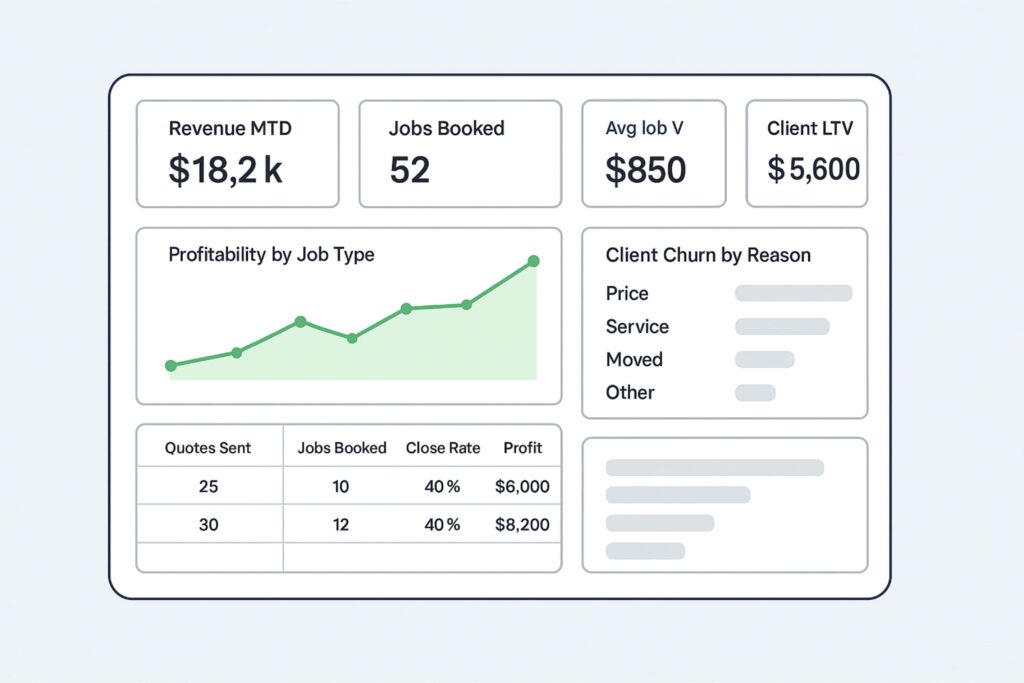
If you don’t know your numbers, your business is guessing.
And guesswork doesn’t scale — it bleeds cash.
The goal here isn’t to drown in spreadsheets. It’s to track the few metrics that actually tell you if your business is healthy — and where to fix leaks before they cost you thousands.
Here’s what to measure consistently:
1. Close Rate (aka: Are You Wasting Leads?)
If you’re sending 20 quotes a week but only booking 3 jobs, there’s a problem:
- Are your prices off?
- Are your follow-ups weak?
- Are you quoting the wrong type of clients?
Start tracking:
- Number of quotes sent
- Number of jobs booked
- Close rate = booked ÷ quoted (you want 40–60% or higher)
If you’re below that, fix your follow-up game and simplify your quotes.
2. Job Profitability (Not Just Revenue)
More revenue doesn’t matter if it’s killing your margins.
Track:
- Time spent vs. time estimated
- Actual material cost vs. what you budgeted
- Fuel, dump fees, delivery, rework — everything
Even simple job costing on a spreadsheet can show which services are profitable, and which ones are just keeping your team busy for no reason.
“Busy doesn’t mean profitable. A $10,000 install that nets $800 isn’t a win — it’s a liability.”
3. Average Job Value
Are you doing five $300 jobs per week… or two $2,000 jobs? There’s no wrong answer — but the latter usually scales better with less chaos.
To grow, you want to slowly move your average job value up by:
- Bundling services
- Offering seasonal contracts
- Selling annual plans instead of one-offs
The higher your job value, the fewer clients you need to hit your revenue goals — and the easier your schedule is to manage.
4. Churn Rate and Lifetime Value
If people aren’t sticking around, growth turns into a treadmill.
Track:
- How long clients stay on average
- Why they leave (price, service, inconsistency?)
- How much a typical client is worth per year
Want to grow faster? Focus on retention, not just acquisition. It’s 5x easier to keep a happy customer than find a new one.
Final Thoughts on How to Grow a Landscaping Business
Most landscaping businesses never hit their true potential. Not because of a lack of talent — but because they get stuck wearing every hat, doing low-margin work, or chasing the wrong kind of growth.
Here’s the truth:
Growing your landscaping business isn’t about doing more — it’s about doing less, better.
What actually moves the needle:
- Raising your prices to protect your margins
- Automating the stuff that eats up your evenings
- Building a team that frees you from the field
- Showing up where your best customers are searching
- Tracking the numbers that tell you when to scale — and when to stop
And here’s the part no one talks about:
You don’t have to figure this out alone.
Want to Skip the Trial and Error?
We work with landscaping business owners who are serious about growth — but don’t want to burn out getting there.
We’ll build your:
- Booking-ready website
- CRM with automations that follow up and close leads
- Lead generation campaigns (Google, Facebook, SEO — done for you)
- Systems that let you scale your ops without working 80-hour weeks
You don’t need more hustle — you need a partner that knows how to grow a landscaping business without you doing everything manually.
Book a free strategy call and let’s build it with you.
FAQ: How to Grow a Landscaping Business
How do I get more landscaping clients without spending a fortune on ads?
You don’t need a massive ad budget to grow. Start by optimizing your Google Business Profile, getting reviews from happy customers, and showing up in local search results. Then, layer in referral programs, seasonal promos on Facebook, and targeted Google Ads when you’re ready to scale.
What’s the best way to grow a landscaping business in the off-season?
Offer off-season services like snow removal, holiday lighting, pruning, or winter cleanups. Use email and social media to stay top-of-mind. You can also pre-sell spring services or maintenance plans to generate cash flow during slower months.
Should I focus on residential or commercial landscaping to grow faster?
Residential landscaping usually scales faster with less red tape, simpler contracts, and better cash flow. Commercial accounts pay more, but can be harder to win and slower to pay. Start with residential, systemize it, then consider expanding into commercial.
How can I scale my landscaping business without burning out?
Start by raising your prices, documenting your systems, and delegating admin tasks. Use tools like CRMs and job schedulers to automate repetitive work. Build a crew you can trust so you can work on the business, not in it every day.
When should I hire more staff or invest in new equipment?
Only after your systems are in place and your jobs are priced for profit. If you’re consistently turning down work or burning out your current team, it’s time to hire or upgrade — but make sure the growth won’t hurt your margins.